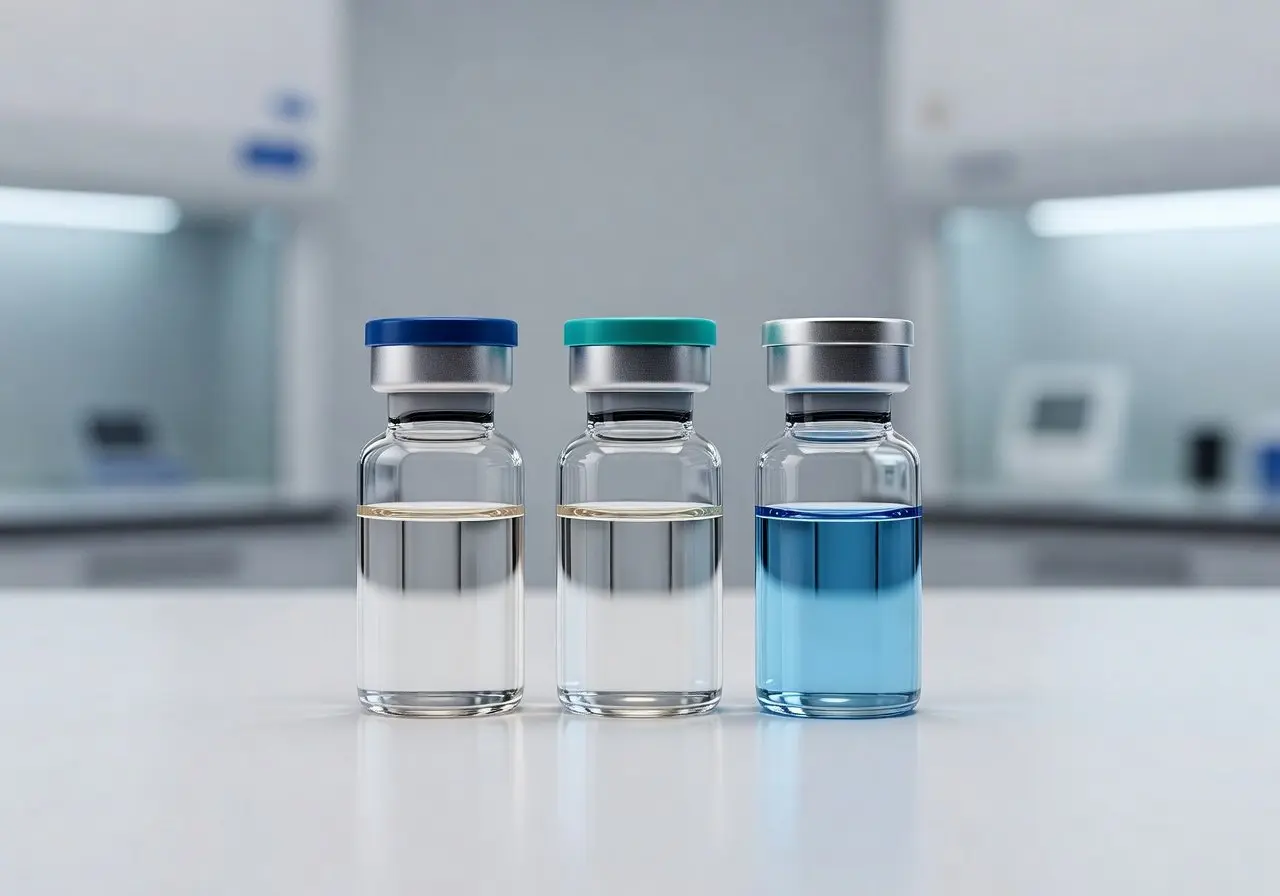

TB-500 Peptide: How It Works, Evidence & Safety
Quick answer: TB-500 is a peptide sold as a thymosin beta-4 (Tβ4) mimic or fragment, marketed for injury recovery. Its proposed mechanism is real biology: it binds G-actin, reshapes the cell cytoskeleton, and drives three repair behaviors — cell migration, angiogenesis, and inflammation modulation. But that evidence is strong in animals and thin in humans, "TB-500" is a market label with no guaranteed identity, it is not FDA-approved, and it is banned in tested sport. Interesting biology; unproven product.
You're probably here because TB-500 gets talked about like a magic repair switch, and you want the actual science rather than gym-forum folklore. This guide gives you both halves: the mechanism, which is genuinely compelling, and the reality check, which is less fun but more useful.
What is TB-500?
TB-500 is a synthetic peptide sold in the research market and promoted for tissue repair, tendon and muscle recovery, and general healing. The biology it borrows is that of thymosin beta-4, a naturally occurring peptide found across many mammalian cell types.
- What it's sold as: a thymosin beta-4 (Tβ4) mimic or fragment
- Underlying molecule: Tβ4 — 43 amino acids, ~5 kDa, encoded mainly by the TMSB4X gene
- Core mechanism: G-actin binding → cytoskeleton remodeling → cell migration, angiogenesis, inflammation modulation
- Evidence: strong preclinical; sparse human data, mostly in eye conditions
- Status: not FDA-approved; sold "research use only"; prohibited under WADA
TB-500 vs thymosin beta-4: not the same thing
People use these names interchangeably, and that's the single biggest source of confusion in the whole topic. Thymosin beta-4 is a defined endogenous molecule. "TB-500" is a market label. When someone says TB-500, they might mean a synthetic peptide matching full-length Tβ4, a fragment of it, or whatever a vendor shipped that month.
This matters because specific regions of Tβ4 are tied to specific effects. Researchers have mapped motifs like LKKTETQ (a central actin-binding domain) and anti-fibrotic fragments like Ac-SDKP — real biochemistry when grounded in data, as in this work comparing the LKKTETQ central domain and Ac-SDKP active sites. It becomes nonsense when used as proof that a random vial is delivering a known, consistent structure.
The purity and labeling problem
If you've bought any research peptide, you know the vibe: COA screenshots, chromatography charts nobody verifies, purity claims that float around as if self-proving. The real-world failure points are boring and dangerous — mislabeling, incomplete synthesis, truncations, endotoxin or microbial contamination, residual solvents, and sloppy reconstitution.
Even "terminal acetylation" sounds like an academic footnote until you remember that Tβ4's native N-terminus is acetylated, and changing that can alter stability and function. Then scale up to the bigger question: is the compound in your vial even the sequence on the label? For a gut-check on the incentives in this market, this write-up on major retailers selling unapproved peptides is uncomfortable reading.
TB-500 mechanism of action
Here's the part people actually want — and it starts somewhere unglamorous: actin.
Actin isn't a vibe, it's infrastructure. Cell structure, movement, adhesion, division, and intracellular transport all lean on actin polymerization. Thymosin beta-4 is classically described as a G-actin sequestering protein: it binds actin monomers and shapes the pool available for filament formation. That's not housekeeping — that's leverage.
Step 1: G-actin binding and cytoskeleton control
The cleanest mechanistic anchor is that Tβ4 binds G-actin and regulates monomer availability, which influences cytoskeleton remodeling. This open-access review lays out the "main G-actin sequestering 5 kDa polypeptide" concept without the marketing perfume.
When actin monomers are buffered, cells shift how they form lamellipodia and filopodia, how they crawl, how they stabilize focal adhesions. In a wound, those micro-decisions become macro-outcomes: keratinocyte migration, fibroblast positioning, endothelial sprouting, immune-cell trafficking.
The part people miss: intracellular concentration matters. Endogenous Tβ4 is already abundant in many cells, so adding more exogenously may not behave like topping up a missing vitamin. Sometimes you're pushing a system that's already saturated. Sometimes the limiting factor is somewhere else entirely — oxygenation, mechanical loading, infection control.
Step 2: cell migration and wound closure
Trace Tβ4's reputation back to wound closure and you keep landing on migration and re-epithelialization. Classic work reports roughly 42% increased re-epithelialization in experimental settings. The number isn't the point — the kind of endpoint is. That's surface closure and cellular migration, not "regenerating the original tissue architecture exactly as it was."
Underneath, several layers move at once: actin regulation in migrating cells, changes in adhesion and matrix interactions, and secondary signaling telling cells where to go and when to stop. One paper reports upregulation of zyxin expression during cytoskeletal remodeling — zyxin sitting right at the intersection of force sensing and actin assembly.
If you're thinking about muscle, remember that muscle regeneration isn't just closing a gap: it's satellite-cell activation, inflammation choreography, vascular support, then remodeling under load. Boosting migration can help early phases without guaranteeing the cascade resolves into strong, aligned tissue rather than fibrosis.
Step 3: angiogenesis
New blood vessel formation sounds universally good — until you remember tumors love blood vessels too. Mechanistically, Tβ4 is linked to pro-angiogenic signaling through VEGF induction, endothelial migration, and pericyte recruitment. There's a well-cited detail about a 7-amino-acid actin-binding motif essential for angiogenesis, and another study reporting a 4.4-fold increase in blood vessel density via VEGF induction.
But vessels aren't just tubes — they need networks that don't collapse, which brings in matrix remodeling and pericyte recruitment. Angiogenesis is a program, not a switch. There's also evidence for N-terminal modulation of pro-angiogenic pathways — legitimate fragment science, but only when you're talking about a defined fragment rather than a marketing label.
Step 4: inflammation modulation
Inflammation isn't the villain; chronic, dysregulated inflammation is. Tβ4 has been studied where modulating cytokine balance could improve healing, touching NF-κB, Toll-like receptor signaling, PI3K/Akt, and eNOS — the traffic controllers of immune and endothelial function, covered in this overview of NF-κB, TLR, and PI3K/Akt/eNOS pathway regulation.
One striking detail is the sulfoxide form: thymosin β4-sulfoxide blocks neutrophil chemotaxis and halts macrophage infiltration — changing who shows up and how long they linger. If you've watched a wound get stuck in the angry phase, you can see the appeal.
People also love citing "anti-apoptosis" as if it's inherently good. In injured tissue, limiting unnecessary cell death preserves structure. In cancer biology, blocking apoptosis helps the wrong cells survive. Biology doesn't care about your hopes — it cares about context.
The fibrosis tradeoff
The extracellular matrix is scaffolding and signal board at once. Remodeling it can support real regeneration — or tip you into scar-heavy healing. Tβ4 has been associated with reduced myofibroblast activity and less scar formation and tissue fibrosis. Myofibroblasts are the body's contractors: they generate force, lay down matrix, and ideally leave. When they stick around, you get fibrosis. Matrix remodeling is also the lane copper peptides like GHK-Cu are best known for.
But fibrosis isn't universally bad — sometimes rapid stabilization beats perfect restoration, at least early. The tradeoff is timing and dose, and in humans those knobs are barely characterized even for approved anti-fibrotic drugs, let alone an unapproved peptide. Pathway cross-talk keeps showing up too, like ILK/AKT/β-catenin and GSK-3 Wnt signaling. "One peptide, one pathway" is a children's story.
What does the research actually show?
People discuss TB-500 like a clinical tool. The evidence base doesn't support that confidence. What you really have is a stack of preclinical findings — some genuinely impressive — and a much smaller body of human evidence tied to defined thymosin beta-4 formulations rather than whatever is sold as TB-500.
Where the preclinical evidence is strongest
Animal work spans wound healing, corneal healing, cardiac ischemia, neurotrauma, inflammation, and angiogenesis — with clean, measurable endpoints like closure rates, vessel density, and inflammatory infiltration. Cardiac models loom large; newer work discusses reactivation of embryonic gene profiles for adult cardiac vessel development, hinting at deeper reprogramming rather than surface effects. CNS trauma is another active lane, with studies on axonal path-finding, remyelination, and neurorestoration.
Still: mice are not small humans. Their immune systems differ, tissue turnover differs, injury models are simplified, and dosing scales poorly. Preclinical success is necessary for clinical trials — never a substitute for them.
Why human evidence is so sparse
Human evidence for thymosin beta-4 exists, but it's narrow and leans toward specific indications like ophthalmology (corneal epithelial healing, dry eye), using specific formulations rather than generic TB-500.
Why so thin? Money, regulation, and risk. Trialing a peptide meant to drive angiogenesis and modulate inflammation isn't trivial — you need safety margins, manufacturing consistency, clear endpoints, and proof you aren't nudging tumor biology the wrong way. Pro-angiogenic signaling in the wrong context is an obvious red flag. So the human story is far narrower than the internet story.
Realistic expectations vs common claims
If your expectation is "rapid tendon regeneration" or "scarless healing," you're setting yourself up to be impressed by coincidences. A realistic ceiling looks like: possible support for early-phase repair behaviors (migration, angiogenesis), potentially better inflammatory resolution in some contexts, and maybe improved healing quality in certain tissues — with a large asterisk over dosing, timing, route, and product identity.
| Claim you'll hear | What the biology plausibly supports | What's usually missing |
|---|---|---|
| "Heals anything fast" | Some support for cell migration, angiogenesis, inflammation modulation | Human dosing data, standardized product identity, controlled outcomes |
| "Regenerates tissue" | Remodeling and repair signaling may shift healing quality | Proof of true tissue restoration vs merely accelerated closure or scar |
| "No side effects" | Endogenous thymosin β4 already exists in the body | Safety margins for supraphysiologic exposure; long-term cancer surveillance |
One pet peeve: people lump TB-500 and BPC-157 together as if all peptides are the same tool with different vibes — most visibly in the BPC-157 + TB-500 stack. They aren't the same. Their proposed mechanisms, interactions, and evidence contours differ — and if you don't separate them conceptually, you'll read every normal healing fluctuation as proof your stack is working.
A sanity check: ask what you'd accept as evidence if you weren't emotionally invested. Objective functional improvement? Imaging? Biomarkers? Or just "it feels better" — which may be true, but is also the easiest endpoint in the world to buy with placebo, rest, and time.
TB-500 side effects and safety
Honest answer: "safe" is unknown in the way people mean it. Endogenous Tβ4 exists in your body, but that says nothing about supraphysiologic exposure from an unregulated vial. The risks split into two categories, and the second is bigger than people expect.
Biological risks
- Angiogenesis and cancer risk. The same pro-angiogenic signaling that helps ischemic tissue could, in principle, support tumor blood supply. Long-term cancer surveillance data simply doesn't exist for these products.
- Altered apoptosis signaling. Suppressing cell death helps injured tissue and potentially helps the wrong cells too.
- Unpredictable dose exposure. Human pharmacokinetics for the exact product in your hand are typically unknown.
Practical risks (the ones that actually hurt people)
- Product identity and contamination — endotoxins, microbes, residual solvents, wrong sequence entirely.
- Injection complications — best case, localized inflammation. Worst case: abscess, bacteremia, or endocarditis. Sterility is not optional.
- Anti-doping violations if you compete.
Why dosing "protocols" deserve suspicion
You'll find protocols online with confidently stated milligrams, loading phases, and maintenance phases. Treat that certainty as a warning sign. There is no FDA-approved TB-500 labeling, so there is no authoritative dosing standard. Bioavailability by route is usually assumed, not measured, and "intramuscular vs subcutaneous" debates are frequently vibes dressed up as physiology. This guide deliberately gives no dosing figures — more isn't automatically better, timing may matter more than quantity, and pushing one lever in a repair cascade tends to pull another.
Who should not experiment with this
Get proper medical screening — and don't freelance — if you have a history of cancer, clotting disorders, autoimmune disease, uncontrolled diabetes, or chronic infection. And if you're dealing with cardiac ischemia or CNS injury, this is emphatically not a hobbyist domain. Full stop. And before stacking it with anything, make the case for each agent separately.
Is TB-500 legal? Sport bans and legal status
In the United States, TB-500 is not FDA-approved as a drug for therapeutic use. "Not approved" isn't a moral judgment — it's a regulatory status that affects quality control, prescribing norms, and legal distribution. You'll see it sold "for research use only," which is largely a commercial spell that lets vendors keep selling without admitting it's used in humans. The practical takeaway is simple: you are outside the normal medication safety system.
Sport is much clearer. WADA prohibits a broad range of peptide hormones and growth factors, and thymosin beta-4 and its analogs are treated as prohibited in anti-doping contexts. If you compete in tested sport, assume you're risking a violation — especially since contamination and mislabeling are common enough to wreck your career even if you didn't mean to.
Frequently asked questions
What is TB-500?
TB-500 is a peptide sold as a thymosin beta-4 mimic or fragment and marketed for tissue repair and injury recovery. It's not an FDA-approved drug, it's typically sold "research use only," and it's prohibited in tested sport.
Is TB-500 the same as thymosin beta-4?
Not reliably. Thymosin beta-4 is a defined endogenous 43-amino-acid peptide. "TB-500" is a market label that may refer to a full-length copy, a fragment, or a mislabeled peptide — it isn't a guarantee of identity.
What is the TB-500 mechanism of action?
The most defensible mechanism is borrowed from thymosin beta-4: it binds G-actin, influencing cytoskeleton dynamics and cell migration, with downstream signaling that can support angiogenesis and modulate inflammation, plus secondary effects on matrix remodeling and apoptosis.
Does TB-500 actually work in humans?
Human evidence is limited and indication-specific — largely eye conditions using defined thymosin beta-4 formulations. There are no controlled human trials supporting tendon or muscle repair, so broad claims about human tissue regeneration aren't responsibly supported by the evidence.
Is TB-500 safe?
Unknown in the way people mean "safe." Endogenous thymosin beta-4 exists in the body, but supraphysiologic exposure, product purity, sterility, and long-term risks — including cancer-relevant angiogenesis and altered apoptosis signaling — are not well characterized for the products most people buy.
TB-500 vs BPC-157 — are they the same?
No. They're different compounds with different proposed mechanisms and different evidence bases. Treating them as interchangeable "healing peptides" is a good way to misread your own results.
Is TB-500 banned in sport?
Yes. Thymosin beta-4 and its analogs are treated as prohibited under WADA. If you compete in tested sport, assume use risks a violation — and note that contamination or mislabeling can cause one even without intent.
The bottom line
If you're asking for TB-500's mechanism of action, you're mostly asking about thymosin beta-4 biology: actin monomer handling that reshapes cytoskeleton behavior, which then influences cell migration, angiogenesis, immune resolution, and matrix remodeling. That's the plausible science, and it's genuinely interesting.
The less fun answer is the one you actually need. "TB-500" is not one standardized drug. Human evidence is comparatively sparse and doesn't cover the uses people want most. The safety and legal landscape pushes hard toward caution and medical supervision. And if you want real tissue repair, you're still stuck doing the unsexy work: load management, rehab progression, sleep, nutrition — and not mistaking a closed wound for regenerated tissue.
This article is for educational purposes only and is not medical advice. TB-500 is not FDA-approved for therapeutic use, is sold for research use only, and is prohibited in competitive sport under WADA. Talk to a qualified clinician before considering any peptide, and get a proper diagnosis before treating an injury.