


Sermorelin Review: Dosage, Use, Benefits, Safety Tips

Introduction
If you're searching "sermorelin guide, dosage, usage and benefits," you're usually in one of two camps: you're a clinician (or a very motivated patient) trying to make a sober call on whether nudging the growth hormone (GH) axis makes sense, or you're a hard-training human who's tired of waking up feeling like your joints got into a bar fight overnight. Sermorelin can be worth trying when the goal is a measured, physiologic push toward healthier GH pulses, with realistic expectations, clean contraindication screening, and actual lab monitoring, not vibes.
Also, quick clarity: sermorelin is not "HGH." It's a growth hormone releasing hormone (GHRH) analog that asks your pituitary to do more of its own job, which is exactly why the results tend to feel boring at first (sleep, recovery), then slightly more visible later (body composition), and why the safety profile is typically friendlier than injecting recombinant human growth hormone.
What is it, and is it worth trying?
Sermorelin acetate is the 1-29 amino acid fragment of native GHRH. Clinically, that matters because 1-29 is the business end that binds pituitary somatotroph receptors and prompts endogenous GH release in pulses. In normal physiology, GH secretion is pulsatile, heavily sleep-linked, and balanced by somatostatin and downstream IGF-1 negative feedback. Sermorelin plugs into that loop instead of bulldozing it.
Is it "worth it"? For the right person, yes. For the wrong person, it's an expensive way to learn that hormones do not negotiate with your lifestyle.
Core performance ratings (my scorecard):
-
Sleep and next-day recovery: 4/5
-
Body composition (without lifestyle changes): 2/5
-
"I feel younger" subjective vitality: 3/5
-
Predictability and titration: 3/5
-
Side effects / tolerability: 4/5
Pros
-
Tends to preserve physiologic feedback loops, which reduces the "I accidentally ran my IGF-1 into the clouds" problem you see with exogenous GH
-
Often well-tolerated, with side effects skewing mild and local (injection site irritation) in properly screened patients
-
Pairs naturally with bedtime administration because that's when GH biology already wants to party
-
For some adults, it lands as a sleep and recovery lever first, not a vanity lever, which is… honestly healthier
Cons
-
Off-label use is common, and it is not FDA-approved as an anti-aging therapy
-
Outcomes can be subtle and slow, which makes impatient people furious (and fuels the online "money pit" discourse)
-
Quality control depends on sourcing; the difference between pharmacy-grade compounding and the gray market is not a philosophical debate, it's a sterility and accuracy debate
-
If you stack three other peptides and TRT, then claim sermorelin "changed your life," your experiment is basically confetti
How it works in the body
Mechanism first, because the mechanism explains the lived experience.
Sermorelin binds the GHRH receptor on pituitary somatotrophs, increases intracellular cAMP, and triggers GH release. That GH then stimulates hepatic and peripheral production of insulin-like growth factor 1 (IGF-1), which mediates many downstream effects people chase: connective tissue remodeling, shifts in substrate utilization, and a general "recovery budget" bump.
Pharmacokinetics are part of why dosing culture gets weird online. Sermorelin itself has a short plasma half-life (minutes, not hours), so you're not "filling the tank" the way you do with long-acting hormones. You're cueing a pulse. That's why timing, fasting state, sleep quality, and consistency matter more than the macho instinct to crank the dose.
This is also the cleanest way to explain how sermorelin differs from growth hormone therapy. Recombinant HGH bypasses the pituitary and can drive supraphysiologic exposure if you're heavy-handed, with more edema, arthralgias, carpal tunnel symptoms, and glucose issues showing up as the dose climbs. Sermorelin, in contrast, still has to obey the body's internal brakes (somatostatin, IGF-1 feedback). Clinical reviews have made the case that this "physiologic superiority" is the point for many adults, not raw strength of effect, and Walker's review in Clinical Interventions in Aging is a solid example of that framing if you want the deeper dive without marketing noise (it reads like medicine, because it is): the adult GH insufficiency discussion.
Benefits, timelines, and realistic expectations
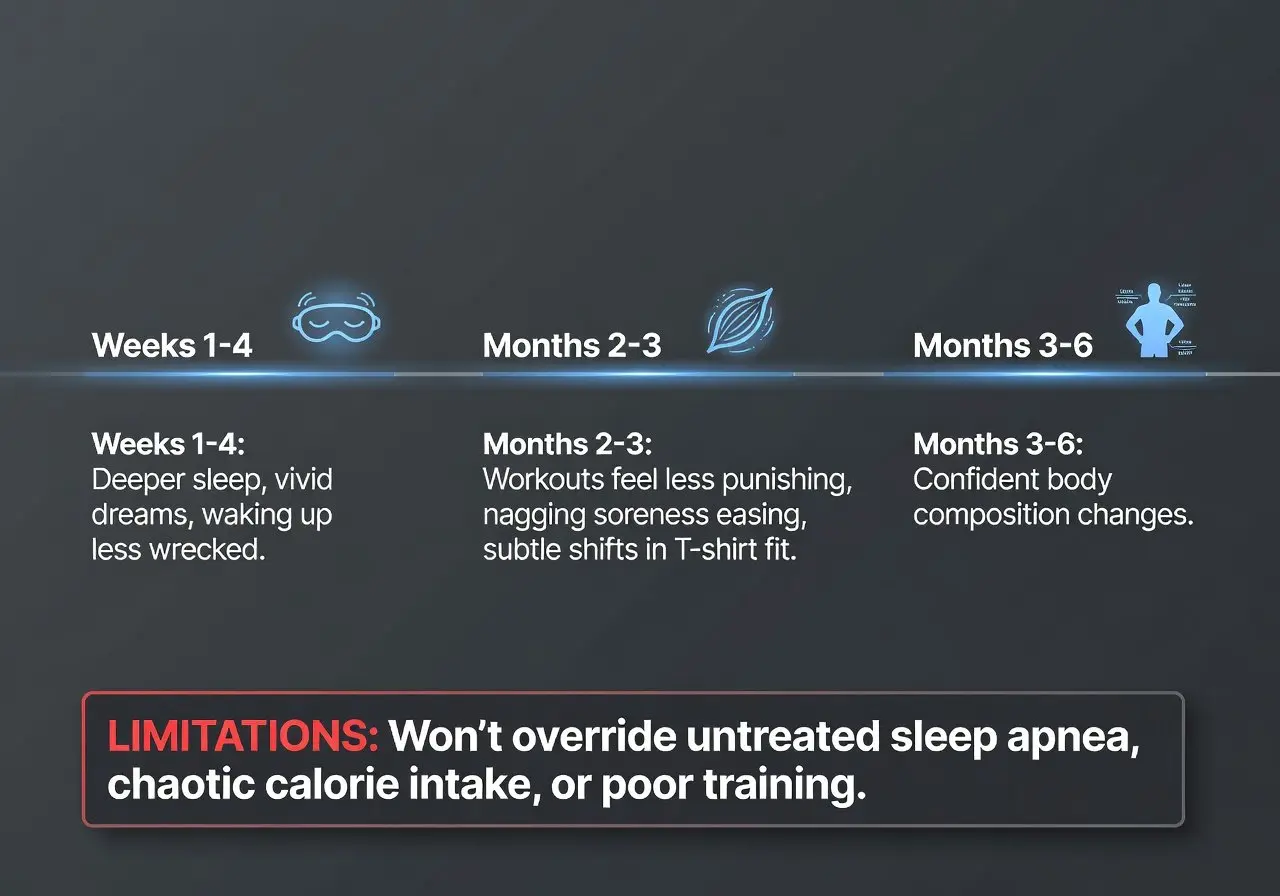
Most of the real benefits people report cluster into three buckets: sleep architecture, recovery capacity, and the slow creep of body composition changes that follow better training and better rest. That timeline matters.
Weeks 1-4 is where I expect the "I'm sleeping deeper" or "I wake up less wrecked" talk. Sometimes you'll hear vivid dreams or a more obvious "rested" feeling. If someone claims they dropped a dramatic amount of fat in 10 days, I usually suspect they also cleaned up food, alcohol, and bedtime and credited the peptide because it's more fun to credit the peptide.
Months 2-3 is where you may see workouts feeling less punishing, nagging soreness easing, and the first believable shift in how someone looks in a T-shirt. Months 3-6 is where the more confident body composition claims tend to show up in the wild. That aligns with the general "3-6 months" chatter you see across patient guides and clinical summaries, and it also matches my own bias: endocrine nudges are not movie montages.
Limitations are not a footnote. Sermorelin won't override untreated sleep apnea, chaotic calorie intake, or a training plan that's basically self-harm. It also won't fix true adult growth hormone deficiency (AGHD) in every patient the way appropriately dosed HGH can, which is why patient selection is the whole game.
Dosing and administration protocol
In legit medical use, dosing is individualized and anchored to response and IGF-1 monitoring. In the real world, you'll see common bedtime protocols in the 200 to 500 mcg range subcutaneously, often five to seven nights per week, with a preference for administering 1 to 2 hours after the last meal because insulin and free fatty acids can blunt GH secretion.
Because you asked for practical direction, here's the version that keeps people out of trouble more often than not:
-
Reconstitute the lyophilized powder using bacteriostatic water with sterile technique; swirl, don't shake, and keep the vial refrigerated after mixing (36°F to 46°F).
-
Administer subcutaneously (abdomen is common), typically using an insulin syringe and rotating sites to reduce irritation.
-
Dose at bedtime, ideally in a fasted window, and keep the routine consistent for at least 6 to 8 weeks before you declare it "does nothing."
-
Run a defined trial window, usually 12 to 16 weeks, then reassess symptoms and labs instead of drifting into endless use because a forum told you to.
A unit reality check saves a lot of confusion. A "5 mg" vial is 5,000 mcg total. Your injection volume depends entirely on how much diluent you add.
|
Reconstitution example |
Concentration |
200 mcg dose |
300 mcg dose |
500 mcg dose |
|---|---|---|---|---|
|
Add 1.0 mL bac water to 5 mg |
5,000 mcg/mL |
0.04 mL |
0.06 mL |
0.10 mL |
|
Add 2.0 mL bac water to 5 mg |
2,500 mcg/mL |
0.08 mL |
0.12 mL |
0.20 mL |
People love to overcomplicate "cycle length." In practice, if someone is going to respond, I expect meaningful subjective signal by 8 to 12 weeks, with the more measurable body comp stuff lagging. If there's no signal at all and labs don't move, pushing time forever is not discipline, it's sunk cost.
Safety, side effects, and lab monitoring
The common side effects are usually boring: injection site redness, itching, mild headache, transient flushing, occasional nausea, and sometimes lightheadedness. The less fun stuff tends to mirror GH/IGF-1 activity: fluid retention, joint pain, tingling, and changes in glucose handling. If you see increasing fasting glucose, rising HbA1c, or creeping edema, you don't "power through." You reassess the dose, the indication, and whether this was a good idea.
Lab monitoring is where the internet gets lazy. If you're using sermorelin medically, you track IGF-1 as a response marker, plus metabolic markers because insulin resistance is not a theoretical risk when you play with growth pathways.
In clinic-style monitoring, that usually looks like baseline IGF-1, fasting glucose (and often HbA1c), lipids, and thyroid markers if the symptoms warrant it, then repeat IGF-1 after 6 to 8 weeks and adjust. If a patient has headache plus visual changes, you do not shrug, because intracranial hypertension is rare but real in GH-related therapies.
Contraindications and precautions deserve plain speech. I would not use sermorelin in anyone with active malignancy, proliferative diabetic retinopathy, uncontrolled diabetes, or untreated severe obstructive sleep apnea. If there's a history of pituitary tumor, you need specialist-level oversight. Pregnancy and breastfeeding are also not the arena for self-experimentation.
If you're an athlete under anti-doping rules, this is also where "benefit" meets consequences. The U.S. Anti-Doping Agency has been blunt that athletes should understand what sermorelin is and why it can violate policies; if that's your life, read their guidance like an adult, not like a loophole hunter: what athletes should know.
One more unsexy angle: privacy. If you're going through a telehealth or clinic, ask how your personal health information is handled, what patient authorization looks like for sharing data with third parties, and whether their security posture is real or just a website badge. I've watched people obsess over micrograms while ignoring confidentiality, then act shocked when marketing starts following them around the internet.
Buying Guide: Who should buy this?
The best-fit buyer is the person who can treat this like a controlled trial, not a personality.
If you already train, already care about sleep timing, and you're willing to measure outcomes (symptoms plus labs), sermorelin has a decent shot at feeling like a meaningful recovery upgrade over a few months. If you're expecting "HGH-movie results," you're the classic disappointment story, and it's not because the peptide is fake, it's because the expectation is.
Who should not buy it? People who won't monitor labs, people with the contraindications above, people trying to brute-force fat loss without changing food, and people who are already stacking multiple hormones and "can't tell what did what." Also, anyone shopping purely on price with no plan for sterility, storage, and dosing accuracy is volunteering for an incident.
On sourcing, I reviewed a commonly circulated listing here: Sermorelin. That's not a medical endorsement. It's a reality check that a lot of consumers are navigating non-pharmacy channels, and the risk profile changes when you leave regulated pharmacy supply chains.
If you're trying to do this through formal care, your cost and access may run into insurance friction, deductibles, pharmacy benefits management rules, or outright exclusions because this is often not deemed medically necessary in "optimization" contexts. Some people route payment through FSA or HSA accounts, some can't, and yes, it's messy.
Real-World Testing
A spec sheet says "GHRH(1-29), 5 mg lyophilized." Real life says: you're reconstituting a tiny vial in a kitchen that may or may not be clean enough, hoping your fridge temperature is steady, and then trying to time bedtime dosing around late dinners, travel, or a partner who thinks syringes in the butter compartment are serial-killer adjacent.
In day-to-day use, the biggest "win" is usually that workouts feel like they cost less. The soreness curve changes. The second-order effect is you train more consistently because you're less beat up, then body composition follows. That's the loop I see over and over, and it matches my personal skepticism about the hype: sermorelin's best-case looks like a recovery nudge, not a biology override.
The most common frustration is how subtle it can be. Subtle enough that if you're not tracking anything, you'll talk yourself into "it did nothing," then you stop, sleep gets worse again, and only then do you realize what it was doing. Annoying, but common.
What real users notice in daily life
The comment-voice consensus online is weirdly consistent: sleep comes first, then energy and recovery, then body comp if it happens at all. People also notice that if they stop, benefits fade. That's not shocking. You're not "curing" aging. You're applying a stimulus that needs to stay in play to keep producing the same downstream effect.
The part I trust least is when someone is running sermorelin plus BPC-157 plus TB-500 plus CJC-1295 plus TRT and then declares sermorelin the hero. That's not a protocol, that's a stew. If you're going to spend money, spend it with a plan.
Alternatives and how to choose between them
If someone has confirmed AGHD and needs reliable, titratable replacement, recombinant HGH is the direct tool, and it's also the tool with the sharper side effect edge and the higher requirement for careful dosing. For some patients, that trade is appropriate.
If your goal is "stronger GH signal" and you're comfortable with a longer-acting approach, CJC-1295 (especially DAC) tends to be discussed as a longer-duration GH/IGF-1 elevator, which can be attractive and can also be easier to overdo. Ipamorelin sits in the GHRP camp, acting via ghrelin receptors to stimulate GH release, often perceived as gentler on appetite than older GHRPs, but again, stacking complicates attribution.
Here's a simple comparison frame that clinicians and serious patients can use:
|
Option |
What it does |
Typical upside |
Typical downside |
|---|---|---|---|
|
Sermorelin |
Mimics GHRH to prompt pituitary GH pulses |
Often better tolerated; more physiologic |
Can be subtle; depends on pituitary responsiveness |
|
Recombinant HGH |
Provides exogenous GH |
Strong, direct effect |
Higher risk of edema, arthralgia, glucose issues if mis-dosed |
|
CJC-1295 (DAC) |
Longer-acting GH secretagogue behavior |
Longer signal; fewer injections |
Easier to drift into "more is more" mistakes |
|
Ipamorelin |
Ghrelin-receptor GH release |
Often perceived as smoother |
Still not consequence-free; stacking muddies outcomes |
Sometimes the best alternative is not another peptide. It's fixing sleep apnea, alcohol intake, late-night eating, training volume, and stress. Boring. Effective. Annoyingly effective.
Conclusion
Sermorelin is a legitimate tool for stimulating endogenous growth hormone release, and it earns its reputation as "safer than HGH" mainly because physiology keeps more guardrails in place. It also earns its reputation for being subtle, slow, and occasionally disappointing, because that's what happens when you're nudging a pulse-based endocrine system instead of injecting the endpoint hormone.
My verdict splits by persona. If you're a consistent trainer, you care about sleep, you'll run labs (IGF-1 plus metabolic markers), and you can commit to a defined 12 to 16 week trial with clean dosing and storage, this is a Buy. If you want fast, visible transformation, refuse monitoring, or you're already deep in stack culture and can't isolate variables, it's a Skip.
Articles

For post-cycle balance, clomiphene and enclomiphene usually make more sense when your main goal is restoring LH and FSH signaling, because they work upstream on estrogen feedback at the hypothalamus and pituitary. Raloxifene is different.
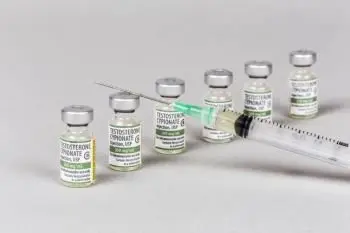
Trying to decide between Testosterone Enanthate vs Cypionate for TRT? Discover the real differences, half-life comparison, side effects, dosing tips, and which option is best for stable hormone levels.
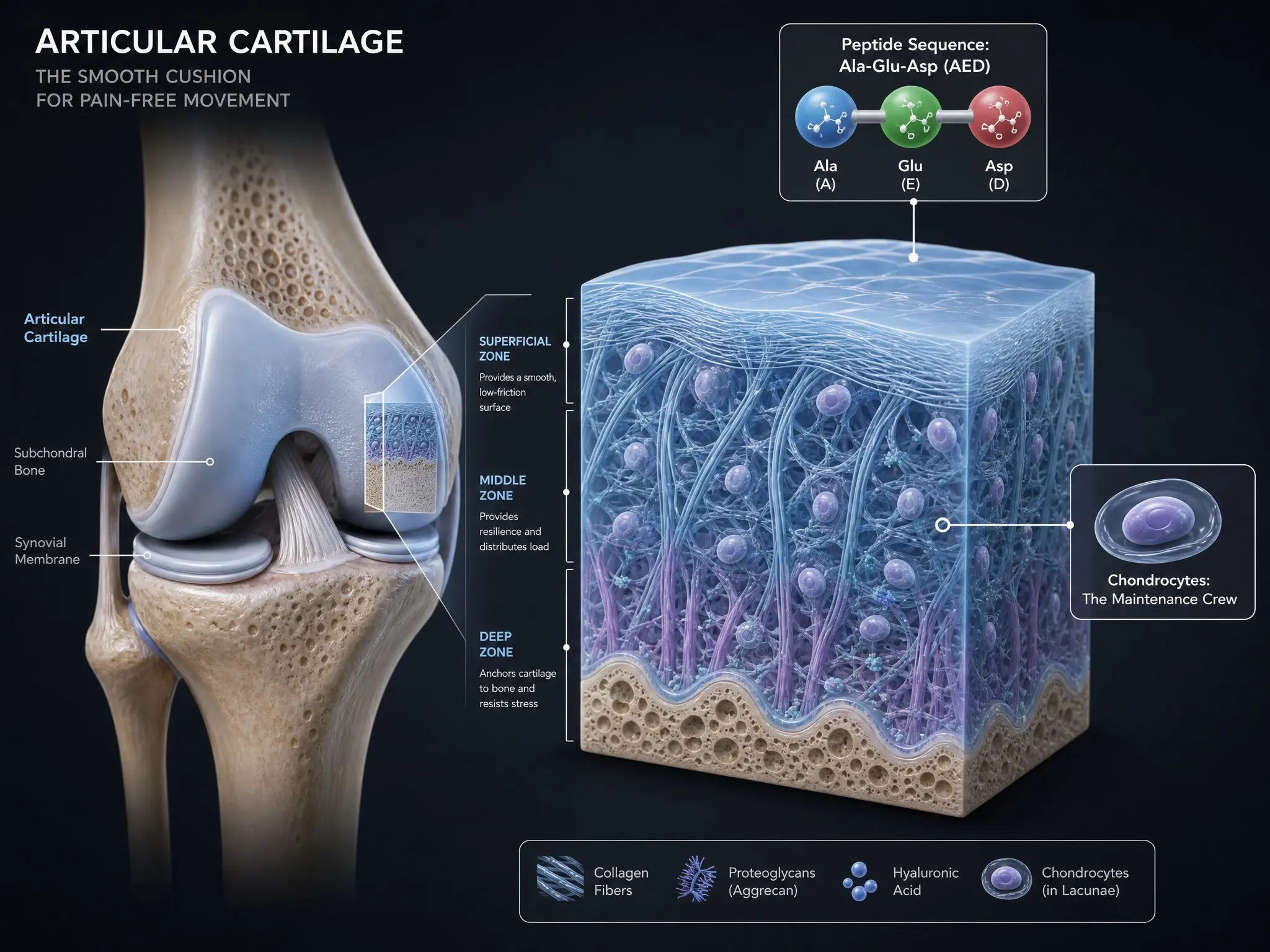
Quick answer: Cartalax (often written Cartalax AED) is an experimental short-peptide bioregulator, usually described as the tripeptide Ala-Glu-Asp, studied for cartilage support and age-related joint decline. People usually find Cartalax after hitting a wall with their knees, hips, shoulders, or hands and going hunting for the compound nobody mentioned at the orthopedic visit.
Customers Reviews
Please leave your review on products or service below.
Thank you beforehand.
- Excellent site and very easy to navigate.
- Easy to use and locate items.