


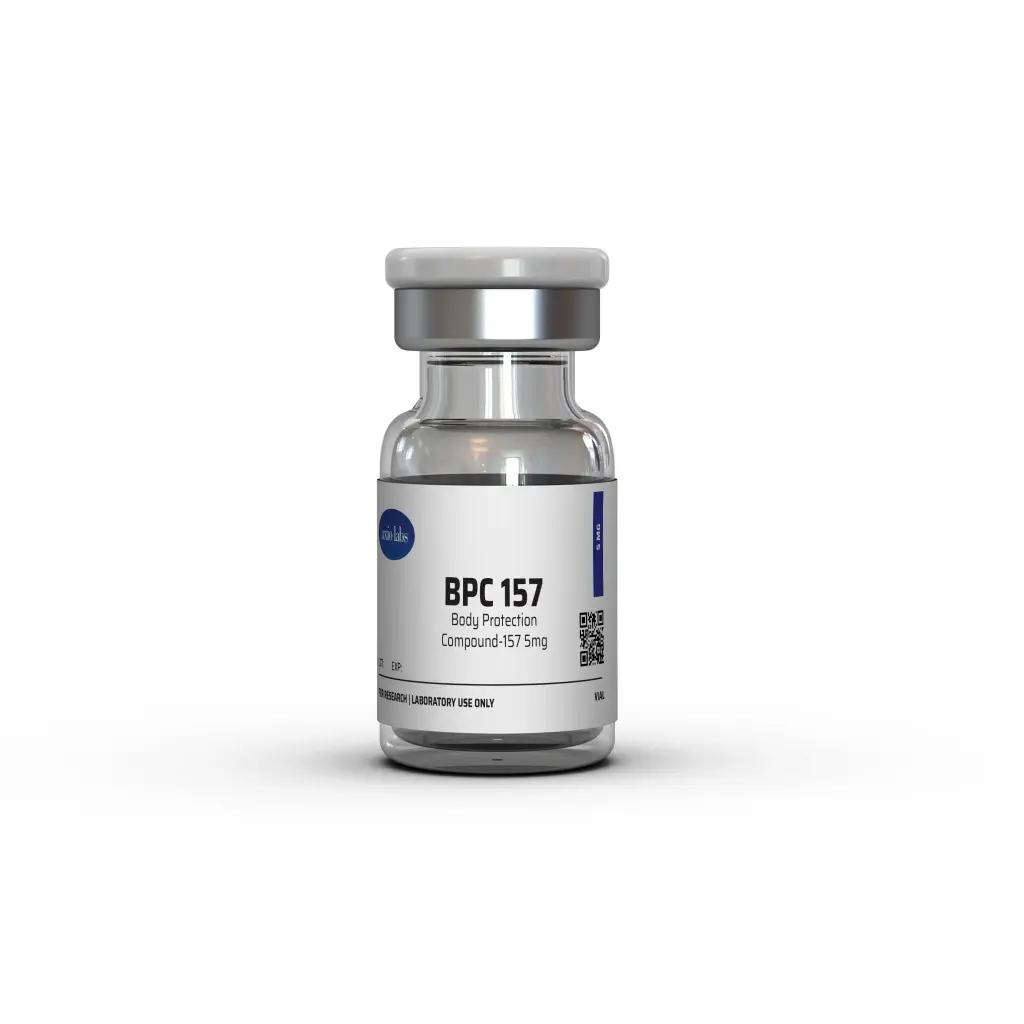
Manufacturer: Axiolabs
Pharmaceutical name: Pentadecapeptide
Pack: vial (5 mg)
⚠️ Provided in a lyophilized powder for stability
| Compound | Primary Use | Target Tissue | Mechanism |
|---|---|---|---|
| BPC 157 | Injury recovery | Tendons, ligaments, muscles | Angiogenesis & repair signaling |
| TB-500 | Systemic healing | Whole body | Cell migration & actin regulation |
| GHK-Cu | Skin & tissue repair | Skin, connective tissue | Collagen stimulation |
| Tier | Amount per dose | What it means |
|---|---|---|
| Dose ranges | ||
| Low | 100 mcg | Cautious starting amount |
| Moderate | 250 mcg | Amount most often used in research |
| High | 500 mcg | Top of the range typically discussed |
| Key facts | ||
| Approval status | Research peptide only; the FDA has not approved any dose for human use | |
| Half-life | Not fixed; varies between reports | |
| Usual route | Injection under the skin (subcutaneous) | |
| Frequency | Once or twice per day | |
| Highest dose studied | 500 mcg | |
| Possible side effects | Irritation at the injection spot, nausea, digestive upset | |
| Disclaimer | Figures are math conversions for reference only, not medical advice | |
| Reconstitution calculator | |
|---|---|
| Find out how much bacteriostatic water to add and how many units to draw on your syringe for your BPC-157 dose. | |
| Peptide in the vial |
mg
|
| Bacteriostatic water |
mL
|
| Dose you want |
mcg
|
| Syringe |
|
| Results | |
| Choose your values and press Calculate. | |
| Concentration | — |
| Amount to draw | — |
| Units to draw | — |
| Doses in the vial | — |
| How the math works | |
| 1. Find the concentration | Divide the peptide in the vial by the water added. For example, 5 mg ÷ 2 mL = 2.5 mg/mL, which is 2,500 mcg/mL |
| 2. Work out the volume | Divide the dose by the concentration. For example, 100 mcg ÷ 2,500 mcg/mL = 0.04 mL |
| 3. Convert to units | On a U-100 syringe, multiply the mL by 100. For example, 0.04 mL = 4 units |
| 4. Check the syringe | Make sure the amount fits the syringe you are using |
| Worked example | |
| Vial | 5 mg BPC-157 |
| Water | 2 mL bacteriostatic water |
| Dose | 100 mcg |
| Syringe | 100 units (1 mL) |
| Concentration | 5 mg ÷ 2 mL = 2,500 mcg/mL |
| Amount to draw | 100 mcg ÷ 2,500 mcg/mL = 0.04 mL, which is 4 units on a U-100 syringe |
| Disclaimer | |
| This tool does math conversions only. It does not choose a dose for you or confirm product quality, safety, or medical suitability. | |
Mixing a peptide takes about a minute. Keeping it good afterwards is the part most people get wrong, so follow the guide below and then store the vial the way we describe underneath it.
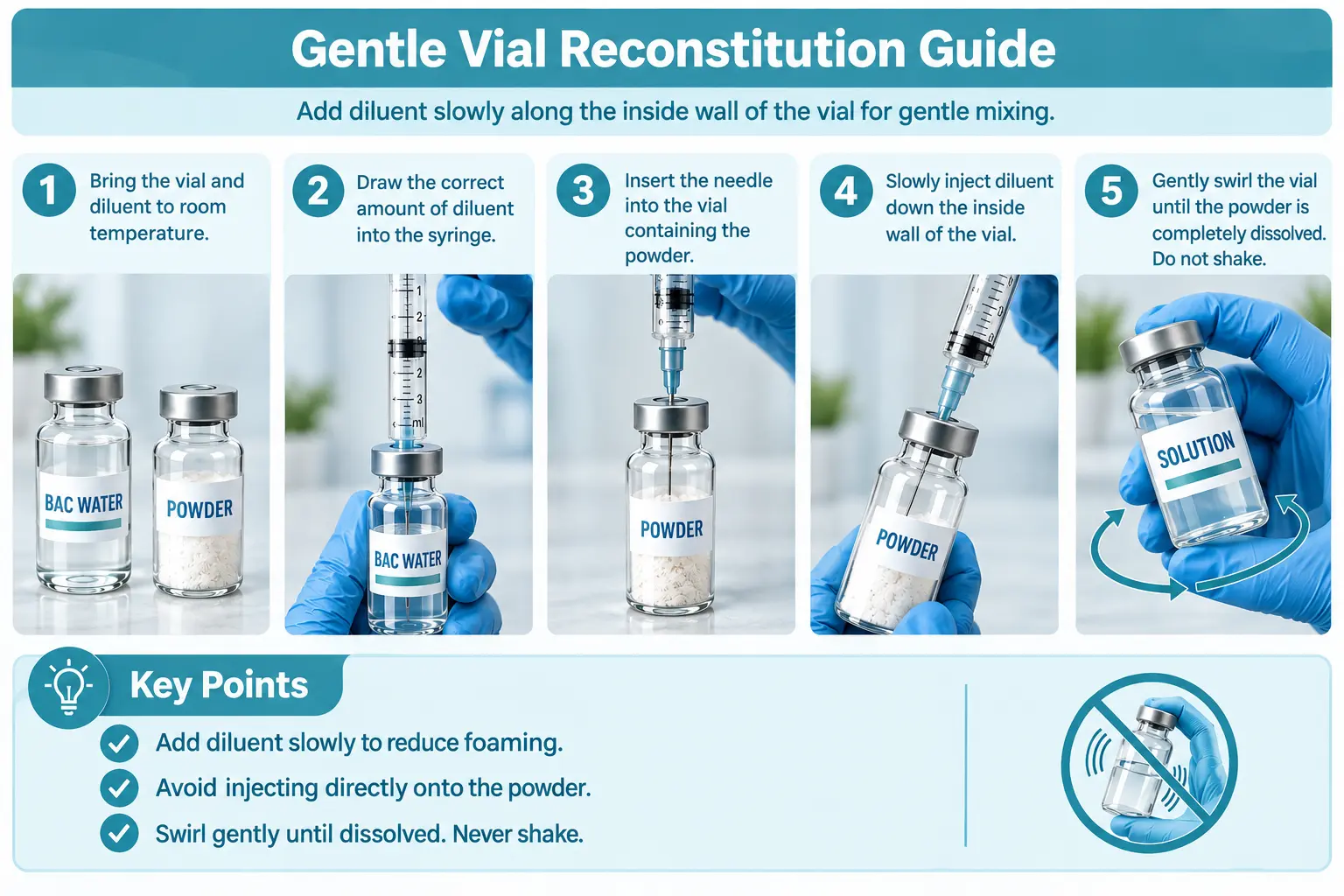
Follow the five steps in the guide above. Bring the vial and the diluent to room temperature first, add the bacteriostatic water slowly down the inside wall so it does not foam and swirl gently until the powder is fully dissolved. Never shake the vial and never spray the bacteriostatic water straight onto the powder.
Once it is mixed, the vial goes back in the refrigerator at 2 to 8°C (35.6°F to 46.4°F) and stays there until you have used it. Write the mixing date on the vial so the clock is visible, not remembered.
Unmixed powder is far easier to store. Keep it dry, out of light, at room temperature for short periods or at -20°C for the long term and reconstitute only what you plan to use.
Please log in to write BPC 157 review.
Manufacturer: Kalpa Pharmaceuticals
Pharmaceutical name: Pentadecapeptide
Pack: vial (5mg per vial)
⚠️ Provided in a lyophilized powder for stability
Manufacturer: Stealth Labs
Pharmaceutical name: Pentadecapeptide
Pack: vial (10mg per vial)
STEALTH - Shipped without label
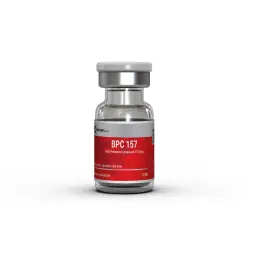
Manufacturer: British Dragon Pharmaceuticals
Pharmaceutical name: Pentadecapeptide
Pack: vial (5 mg)
⚠️ Provided in a lyophilized powder for stability
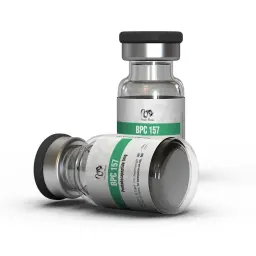
Manufacturer: Dragon Pharma
Pharmaceutical name: Pentadecapeptide
Pack: vial (5 mg)
⚠️ Provided in a lyophilized powder for stability
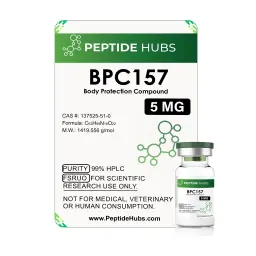
Manufacturer: Peptide Hubs
Pharmaceutical name: Body Protective Compound 157
Pack: vial (5 mg)
⚠️ Provided in a lyophilized powder for stability
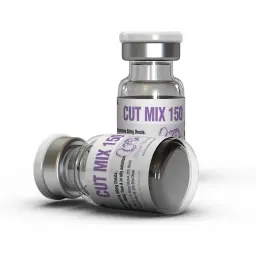
Manufacturer: Dragon Pharma, Europe
Pharmaceutical name: Testosterone Propionate,
Drostanolone Propionate, Trenbolone Acetate
Pack: 10 ml vial (150 mg/ml)
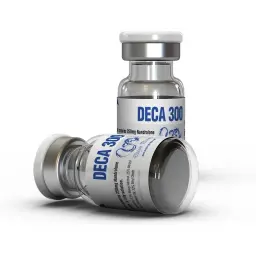
Manufacturer: Dragon Pharma, Europe
Pharmaceutical name: Nandrolone Decanoate
Pack: 10 ml vial (300 mg/ml)
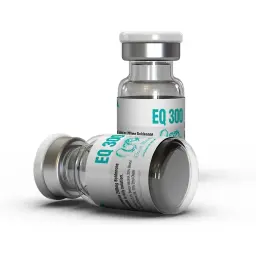
Manufacturer: Dragon Pharma, Europe
Pharmaceutical name: Boldenone Undecylenate
Pack: 10 ml vial (300 mg/ml)