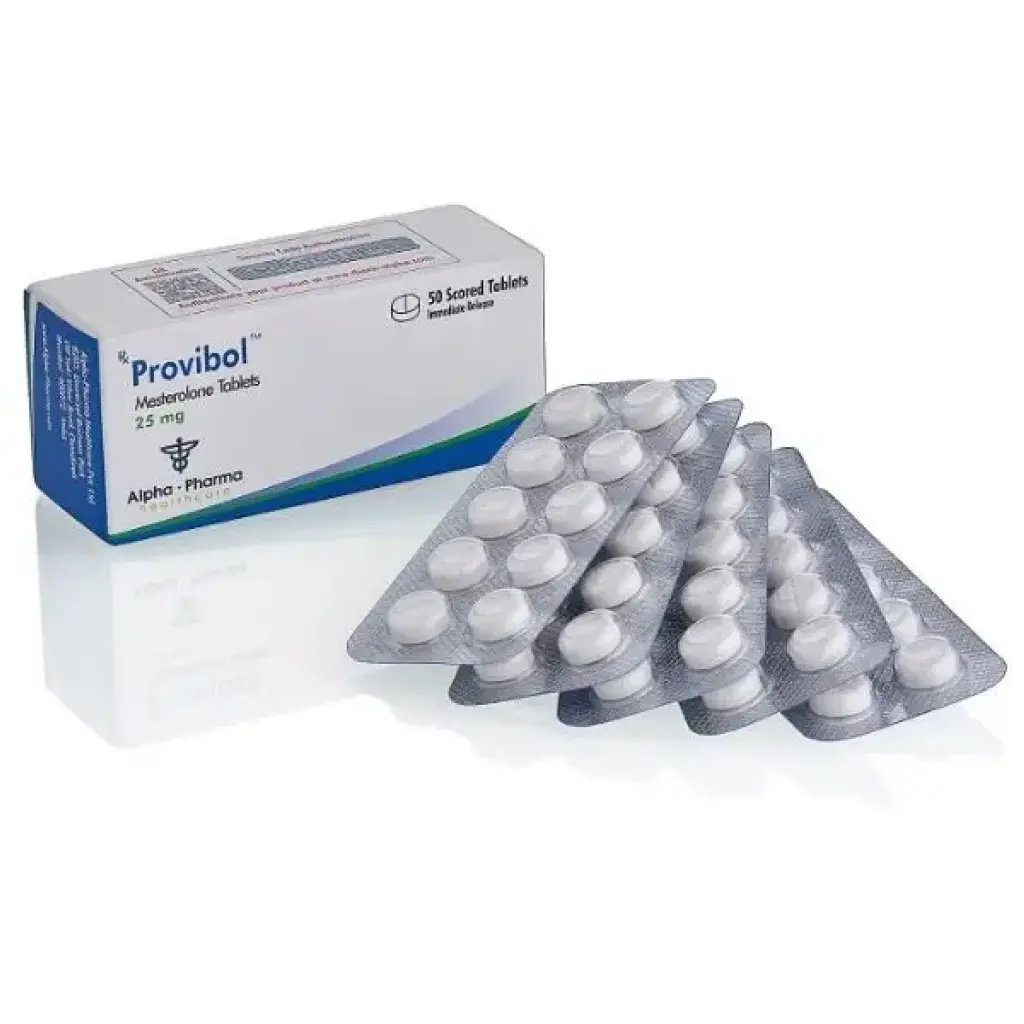
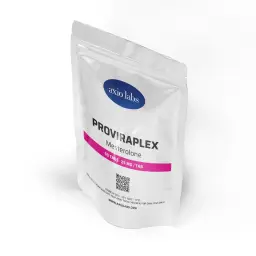
Provibol (Mesterolone) by Alpha Pharma - Androgenic Profile & SHBG Interaction Explained
Provibol by Alpha Pharma contains mesterolone, a synthetic androgen derived from dihydrotestosterone (DHT). Unlike many anabolic agents, mesterolone is primarily androgenic rather than strongly anabolic. It has been used in medical settings for specific androgen-deficiency conditions and male fertility-related disorders. From an endocrine perspective, its unique interaction with sex hormone-binding globulin (SHBG) makes it distinct among orally active androgens.
Mesterolone does not aromatize into estrogen. Because it is a DHT derivative, it cannot convert to estradiol. This characteristic has shaped how it is understood in endocrine discussions, particularly regarding estrogen balance and androgen activity.
Important medical note: Mesterolone is a prescription medication. Although often described as mild in terms of anabolic strength, it still influences the endocrine system and can suppress natural hormone production in certain contexts. Use requires professional supervision and laboratory monitoring.
Understanding SHBG & Why It Matters
Sex hormone-binding globulin (SHBG) is a protein that binds to testosterone and other sex hormones in the bloodstream. When testosterone is bound to SHBG, it becomes biologically inactive. Only "free" testosterone is available to interact with androgen receptors.
Mesterolone is known for its strong binding affinity to SHBG. This means it can occupy SHBG binding sites, potentially increasing the proportion of free testosterone in circulation. From an endocrine standpoint, this mechanism is one of the most discussed properties of mesterolone.
Key endocrine characteristics include:
• Strong affinity for SHBG
• Does not aromatize to estrogen
• Primarily androgenic receptor interaction
• Lower anabolic effect compared to many other steroids
Because of this SHBG interaction, mesterolone has historically been studied in contexts where optimizing androgen balance was clinically relevant.
Androgenic vs Anabolic Activity
Mesterolone is often misunderstood. While it is an androgen, its anabolic activity is relatively limited compared to agents such as
Oxandrolone. It is structurally related to DHT, meaning its primary effects are androgen receptor-mediated rather than muscle-building in the traditional anabolic sense.
From a pharmacological perspective, this means:
• It supports androgen receptor signaling
• It does not convert to estrogen
• It does not significantly promote water retention
• It has limited impact on large-scale muscle hypertrophy
This profile has shaped its medical applications, particularly in androgen deficiency cases rather than anabolic replacement.
Endocrine Suppression & Hormonal Impact
Although mesterolone is sometimes described as less suppressive than stronger anabolic agents, it still interacts with the hypothalamic-pituitary-gonadal (HPG) axis. Any exogenous androgen can influence natural hormone production through feedback mechanisms.
Potential endocrine considerations include:
• Reduced LH and FSH levels
• Suppression of endogenous testosterone (dose-dependent)
• Altered androgen-to-estrogen balance
Endocrine monitoring is recommended when medically prescribed.
Liver & Cardiovascular Considerations
Mesterolone is orally active but not strongly hepatotoxic compared to many 17-alpha alkylated compounds. It is not significantly liver-toxic in the same category as
Oxymetholone or methandrostenolone. However, lipid profile changes and cardiovascular markers may still be influenced.
Monitoring may include:
• Lipid panels (HDL/LDL levels)
• Blood pressure evaluation
• Hormonal panels
No androgen is entirely risk-free, and individual response varies.
Comparison Table