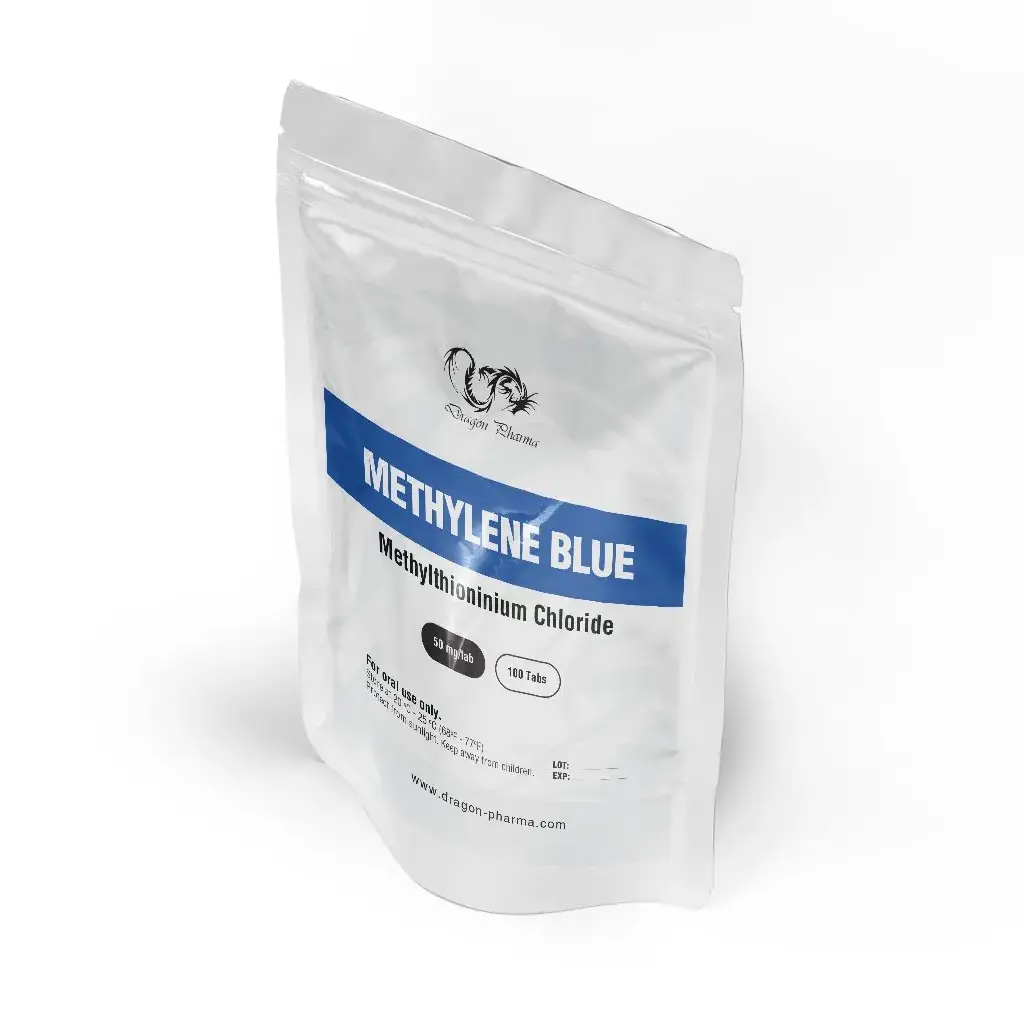
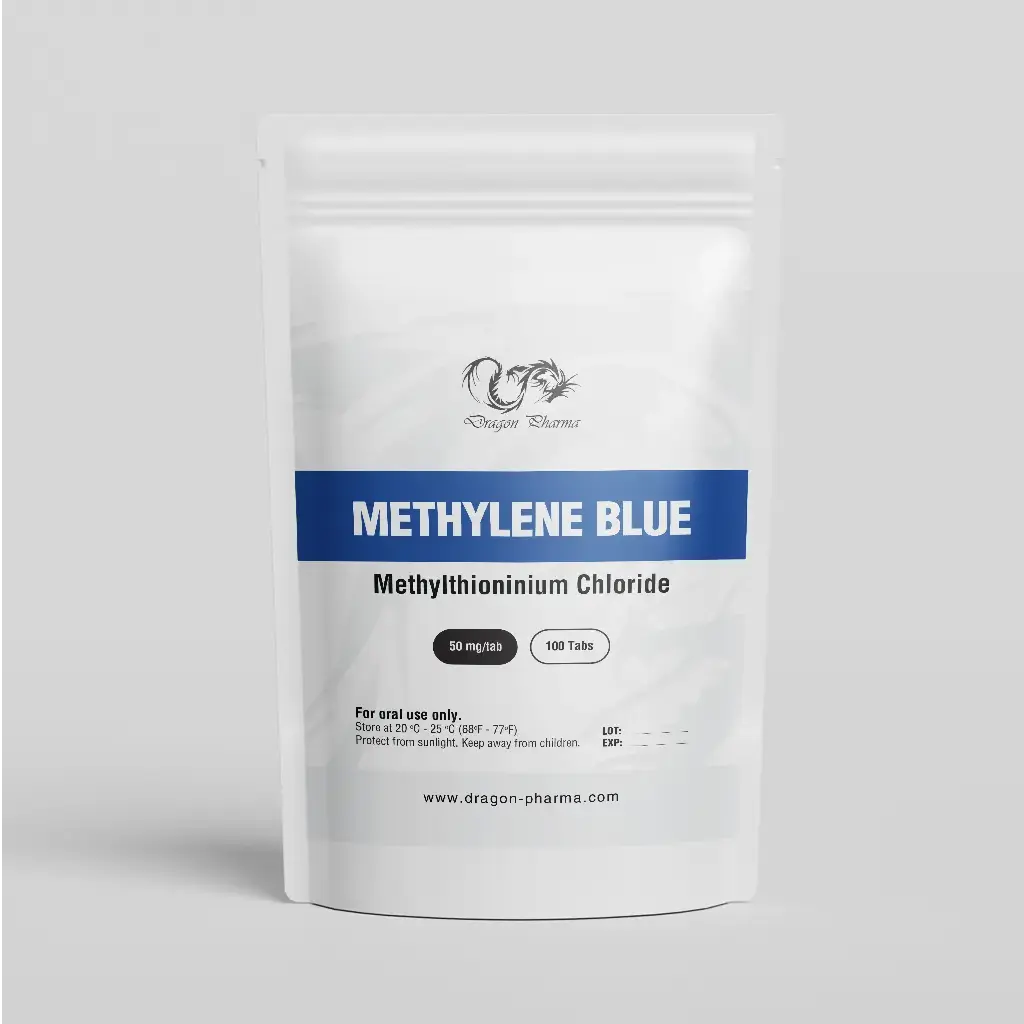
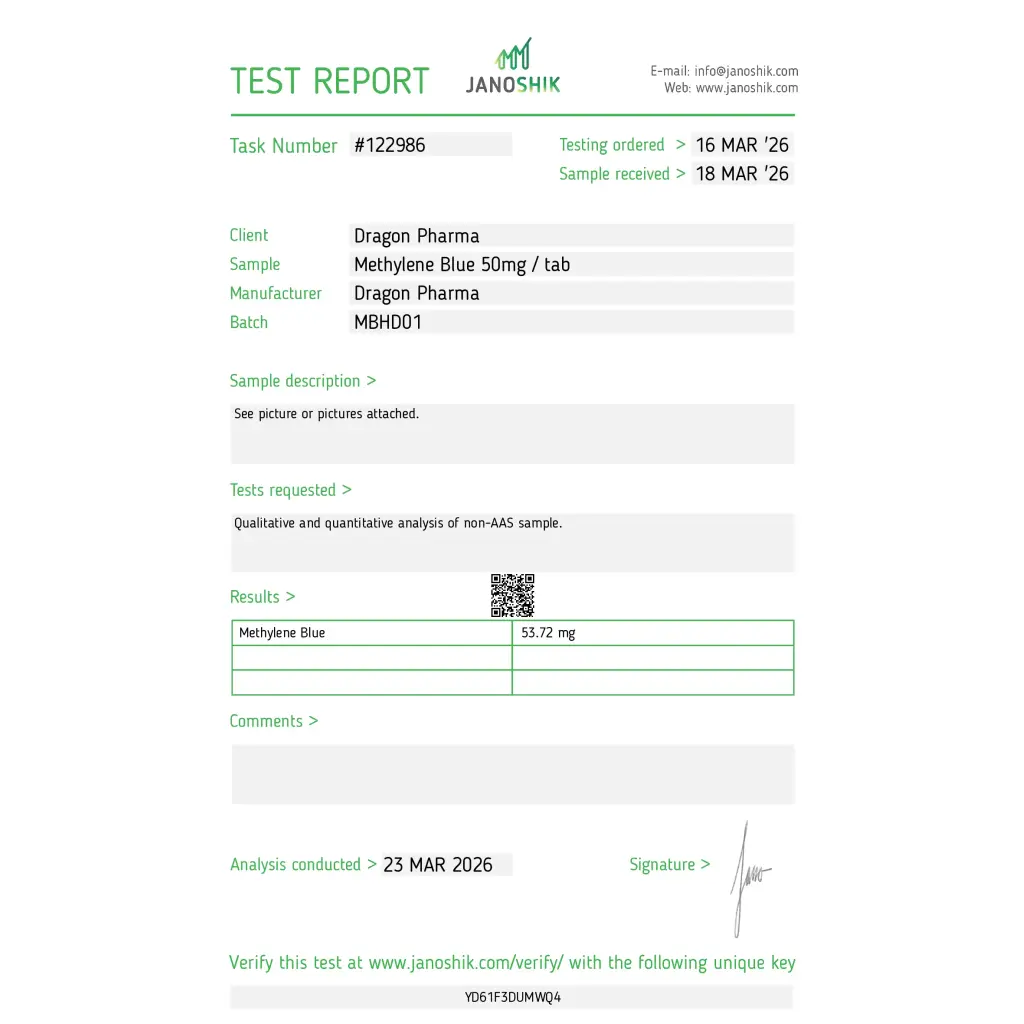
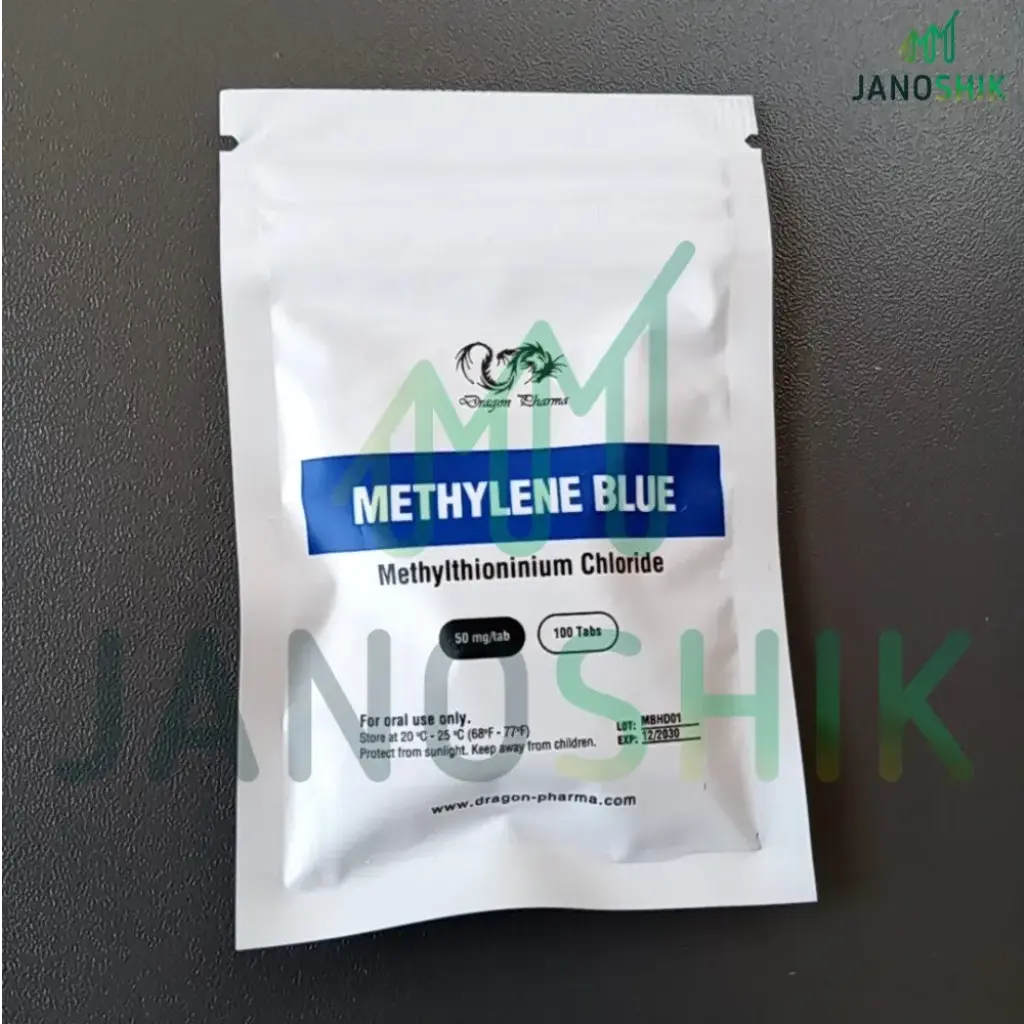
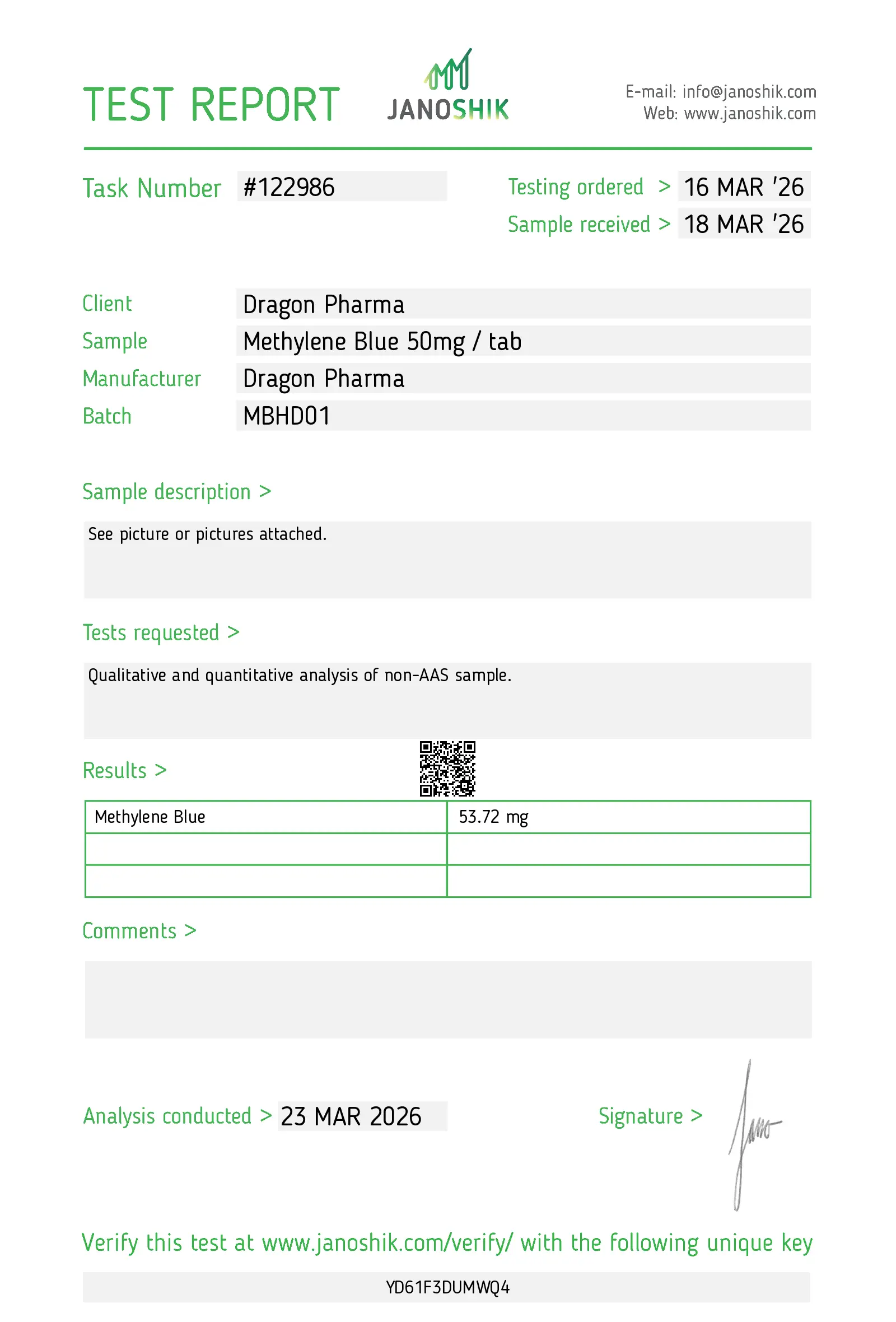
Methylene Blue (Methylthioninium Chloride) 100 Tabs by Dragon Pharma - Mitochondrial Energy & Cellular Support
Methylene Blue, chemically known as methylthioninium chloride, is one of the most researched redox-active compounds in medical science. Originally developed in the 19th century, it has been used clinically for specific medical conditions and is now widely discussed in research circles for its potential role in mitochondrial support and cellular energy optimization.
At the cellular level, mitochondria are responsible for producing ATP, the primary energy currency of the body. When mitochondrial efficiency declines, fatigue, reduced endurance, and cellular stress may increase. Methylene Blue has been studied for its unique ability to participate in redox cycling and assist electron transport chain efficiency under specific laboratory conditions.
Important medical note: Methylene Blue is a pharmaceutical compound with specific approved medical uses. It can interact with medications, especially SSRIs and other serotonergic drugs, and should only be used under medical supervision.
How Methylene Blue Supports Cellular Respiration
Within mitochondria, energy production occurs through a series of electron transfers in the electron transport chain. Research suggests that Methylene Blue may act as an alternative electron carrier in certain conditions, helping support efficient ATP production.
Potential mechanisms studied include:
• Supporting mitochondrial electron transport
• Enhancing cellular oxygen utilization efficiency
• Reducing excessive reactive oxygen species under stress conditions
• Supporting redox balance within cells
By participating in cellular respiration pathways, Methylene Blue has gained attention in research focused on fatigue resistance, metabolic health, and cellular longevity.
Redox Cycling & Oxidative Balance
Methylene Blue functions as a redox compound, meaning it can alternate between oxidized and reduced states. This property allows it to interact dynamically within cellular systems. In controlled research environments, this redox cycling may help maintain mitochondrial efficiency under stress conditions.
Balanced redox signaling is essential for:
• Cellular energy production
• Efficient oxygen utilization
• Healthy mitochondrial signaling
• Managing oxidative stress exposure
Because oxidative stress contributes to aging and metabolic dysfunction, mitochondrial research continues to explore compounds like methylthioninium chloride for cellular resilience support.
Medical Background & Approved Uses
Historically, Methylene Blue has been used in clinical medicine for treating methemoglobinemia, a condition in which hemoglobin cannot effectively release oxygen to tissues. Its mechanism involves restoring normal oxygen transport by facilitating reduction processes in red blood cells.
Its long-standing pharmaceutical history contributes to its reputation as a well-characterized compound, though non-medical use remains an area of research rather than established therapeutic indication.
Mitochondrial Comparison with Other Cellular Support Compounds
Methylene Blue is often discussed alongside compounds involved in mitochondrial health, such as NAD+ and MOTS-c.
While NAD+ functions as a central coenzyme in energy metabolism and MOTS-c acts as a mitochondrial-derived peptide influencing metabolic regulation,
Methylene Blue interacts directly with redox processes and electron transfer dynamics. Each compound works through distinct biochemical pathways.
Comparison Table