


What Causes Injection Site Pain in GH Products: Guide

Injection site pain in growth hormone products usually comes down to three intertwined culprits: the chemistry of the formulation itself (preservatives like m-Cresol, citrate buffers, osmolality), the physical properties of the solution (temperature, viscosity, volume), and the way the injection is delivered into subcutaneous tissue (needle gauge, speed, site rotation, alcohol residue). That's the short answer. The longer answer is messier, because GH products aren't all built the same, and neither are the people injecting them.
Anyone who has shot daily somatropin for more than a few weeks knows that some days the pen barely registers and other days it feels like a wasp landed in the abdominal fat. The variability isn't random. It tracks back to identifiable variables you can actually control, which is good news if you've been chalking your stinging sensation up to "just how it is."
What Causes Injection Site Pain in GH Products?
Pain after a subcutaneous GH injection is a signal, not a verdict. The signal can mean "this excipient is irritating," "your needle hit a sensitive spot," or in rarer cases, "your immune system is mounting a response." Sorting through those possibilities is half the battle.
Formulation Additives
Liquid growth hormone has to stay stable for weeks inside a pen or cartridge, and that requires antimicrobial preservatives and buffering agents. Those additives are doing necessary chemical work. They're also frequently the reason your skin burns for ninety seconds after the needle pulls out. According to a deep review of parenteral GH formulation variables, the choice of preservative, buffer, and osmolality target collectively explains a sizable chunk of patient-reported injection site pain.
Physical Properties
A cold, viscous, hypertonic solution being pushed quickly through a thin needle into a small pocket of subcutaneous tissue is, frankly, a tough ask for your body. Each of those adjectives is a variable. Each one nudges pain levels up.
Technique and Tissue Response
Then there's the human variable. Needle length, the angle you go in at, whether you've been hitting the same square inch of belly for a month, whether the alcohol swab actually dried before the needle broke skin. These aren't trivia. They're the difference between a forgettable injection and the one that leaves a welt.
How Excipients and Preservatives Trigger Stinging
Excipients are the supporting cast in any injectable, and in GH products they punch well above their weight when it comes to discomfort. The somatropin molecule itself is rarely the irritant. The stuff keeping it stable is.
m-Cresol vs. Benzyl Alcohol
m-Cresol is the preservative used in several major GH pens, and it's also the one patients complain about most. Head-to-head comparisons, including clinical work directly comparing preservatives, show m-Cresol at 9 mg/mL producing noticeably higher pain scores than benzyl alcohol. The catch is that benzyl alcohol has its own quirks, including a documented tendency toward protein aggregation that can theoretically increase immunogenic risk. No preservative is innocent. Some are just less rude on the way in.
Citrate Buffers
Citrate buffering keeps the solution at a stable pH but does so at a real cost. A systematic review of citrate-containing versus citrate-free biologics found citrate consistently linked to higher injection site pain scores across multiple product categories. This is the same pattern playing out in adalimumab reformulations and in the broader conversation about glp 1 injection site reactions and other subcutaneous biologics. Citrate stings. Histidine-buffered alternatives, generally closer to physiological pH, sting less.
Osmolality and Tonicity
Body tissue is comfortable around 300 mOsm/kg. Push something significantly hypertonic into that environment and you get a burning sensation as cells try to manage the osmotic gradient. Some GH preparations land on the high side of that range, which is part of why even a "perfect" injection technique can still produce a hot, achy spot.
How Solution Temperature and Viscosity Affect Pain
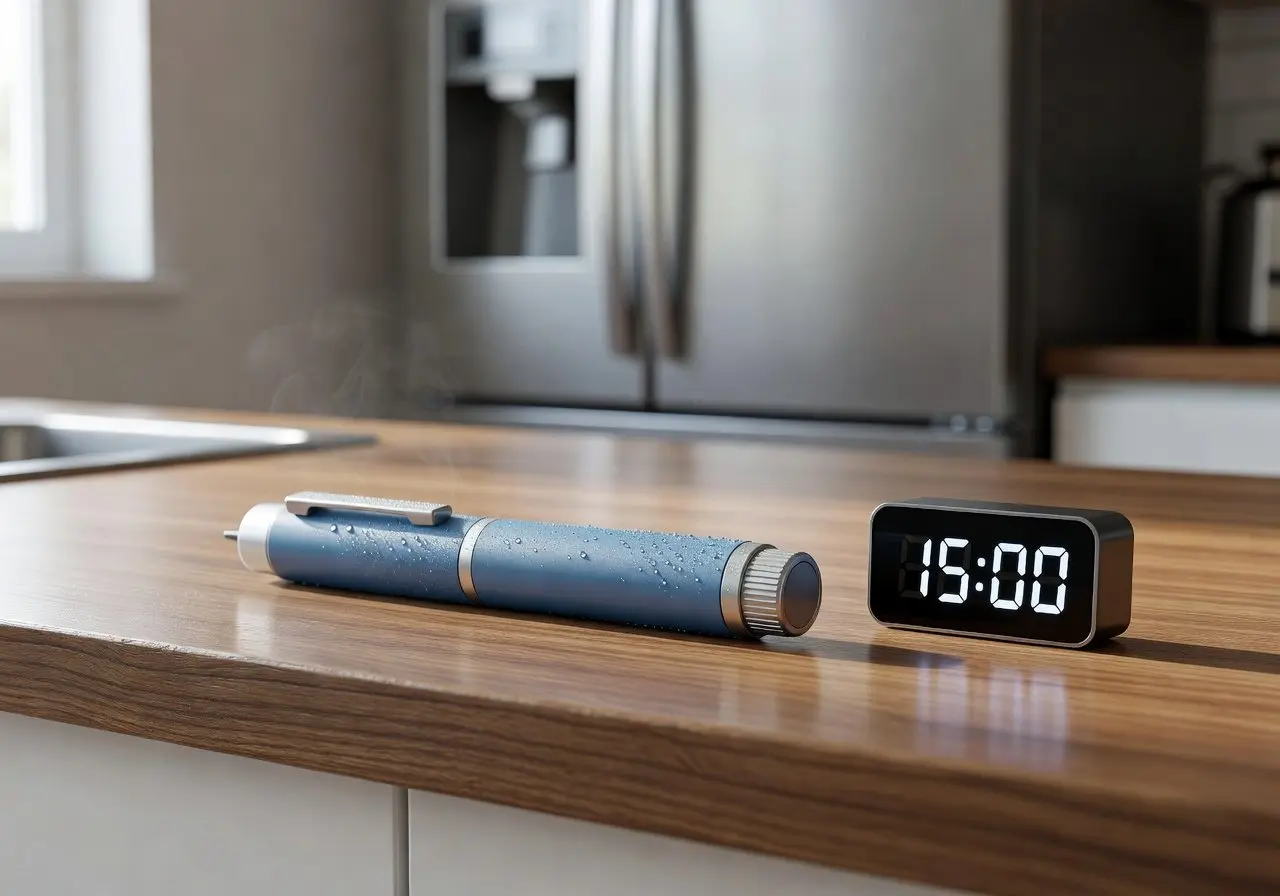
Temperature is the easiest variable to fix and the one most people ignore. Viscosity and volume are harder, because they're baked into the product.
Cold Injection Sting
Pulling a pen straight from the fridge and firing it into your thigh is a recipe for an avoidable sting. Cold biologics produce more thermal shock at the injection site and the nerves around subcutaneous tissue notice. Letting the device sit out for fifteen to thirty minutes before use is the cheapest pain reduction strategy in the entire treatment routine.
Viscosity Thresholds
Thicker solutions take more pressure to push through a needle, and that pressure translates to tissue stretch and discomfort. Oddly enough, the relationship isn't strictly linear. One analysis suggested medium-viscosity liquids can feel worse than high-viscosity ones because of how the flow interacts with subcutaneous receptors. Concentration matters here too. Higher-protein formulations of GH and similar peptide injections tend to land harder.
Injection Volume Limits
Anything above roughly 1.0 mL into a single sc injection site reliably increases pressure-related pain. Splitting larger doses across two sites is a workaround patients on combination protocols (think bpc 157 stacks, tb 500 combination peptide regimens, or a tesamorelin schedule) figure out fast.
Injection Technique Mistakes That Worsen Pain
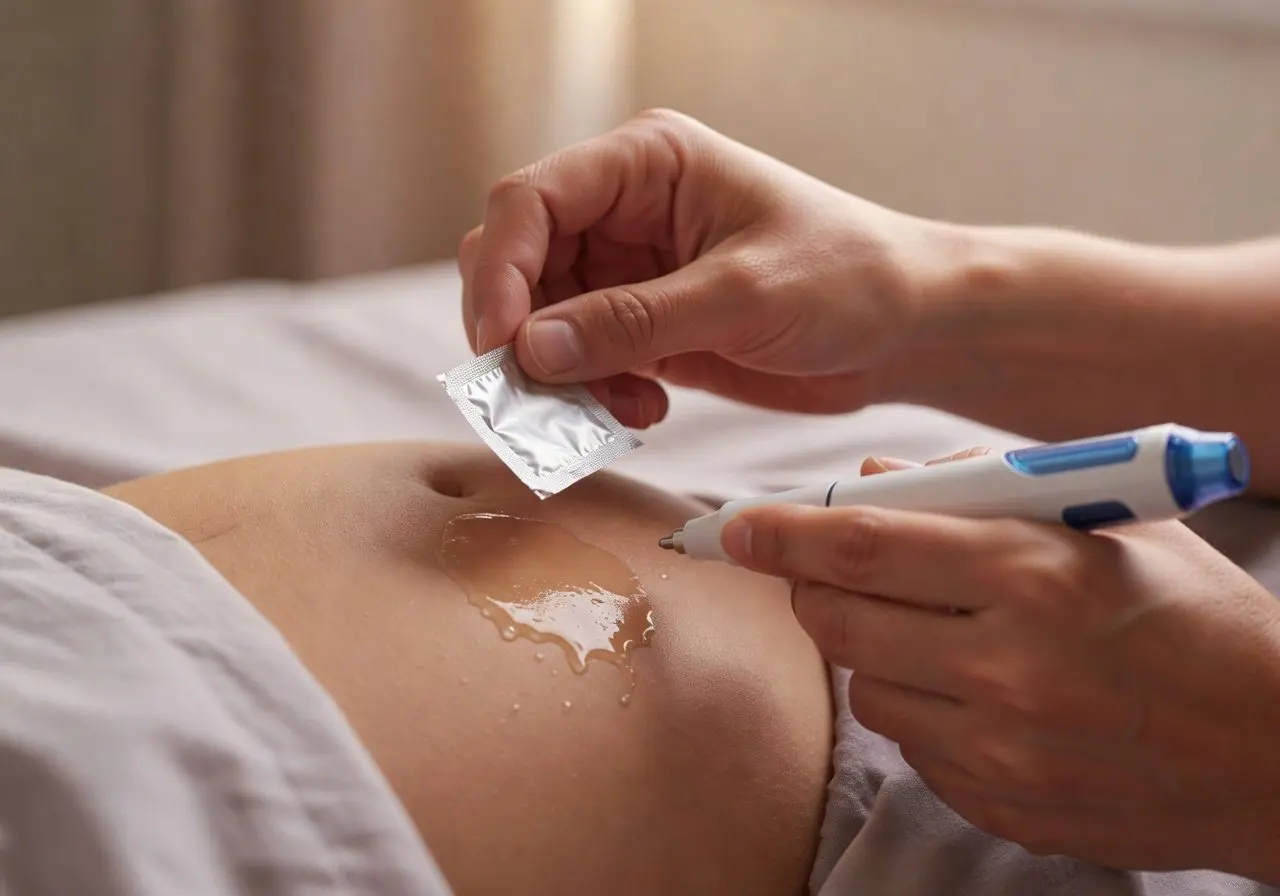
Here's where most of the avoidable pain hides. The formulation is fixed. Your technique isn't.
Needle Size and Trauma
Using a 27G or 29G needle of appropriate length, four to six millimeters for most subcutaneous injections, minimizes tissue trauma. Reusing needles (don't) dulls the tip and turns a clean insertion into a tearing motion. The skin remembers.
Injection Speed
A slow, steady push over five to ten seconds gives the tissue time to accommodate the volume. Slamming the plunger in two seconds is the injection equivalent of stuffing a suitcase shut. Pressure goes up, pain goes up, and the bolus is more likely to leak back along the needle track.
Alcohol Residue
Wiping the skin with an alcohol swab is sensible. Injecting before that alcohol fully evaporates is one of the most underrated causes of stinging. The needle drags wet alcohol into the dermis, and the burn that follows gets blamed on the medicine. Wait the ten seconds.
Normal vs. Abnormal Injection Site Reactions
Knowing the difference between an expected reaction and one that needs a phone call is, in my opinion, the single most important skill a self-injector develops. People get this wrong in both directions, panicking over a pinhead bump or shrugging off a spreading red patch that's actually trending toward an abscess.
|
Reaction Type |
What It Looks Like |
Typical Timeline |
Action |
|---|---|---|---|
|
Mild irritation |
Small pink spot, slight itch, minor tenderness |
Resolves within hours |
Continue therapy, rotate site |
|
Moderate reaction |
Redness up to a coin's diameter, mild swelling, bruising |
Fades within 24 to 48 hours |
Cool compress, monitor |
|
Concerning reaction |
Spreading erythema, warmth, hardening, persistent pain |
Worsens past 48 hours |
Stop injecting that area, contact prescriber |
|
Emergency |
Hives, facial swelling, fever, red streaking, breathing trouble |
Acute |
Seek immediate care |
Expected Mild Reactions
A brief stinging sensation, a small pink halo, a touch of tenderness that fades by the time you've finished your coffee. That's the baseline. Mild injection site reactions are well documented across GH, glp 1 therapy, and peptide categories generally.
Warning Signs
Redness that keeps expanding past 24 hours. A lump that gets harder rather than softer. Bruising that turns purple and stays sore. Skin discoloration that doesn't track with a normal hematoma. These are the moments to stop optimizing and start investigating.
Emergency Symptoms
Severe itching across the body, hives, throat tightness, fever paired with a hot tender injection site, or red streaks radiating outward from the injection area. Stop. Call someone. This isn't the territory for waiting it out or troubleshooting your dose.
How Site Rotation Prevents Lipohypertrophy and Lipoatrophy
Repeatedly injecting somatropin into the same patch of tissue causes problems on both sides of the fat-cell ledger. You can get lipohypertrophy, where the tissue thickens and absorption gets unreliable, or lipoatrophy, where the local lipolytic action of GH destroys subcutaneous fat. A case report on daily growth hormone and localized fat loss walks through exactly how this develops over months of unrotated daily dosing.
Recommended Sites
The usable real estate for GH subcutaneous injections includes the abdomen (avoiding a two-inch radius around the navel), the front and outer thigh, the upper outer buttock, and the back of the upper arm if you have a partner to help.
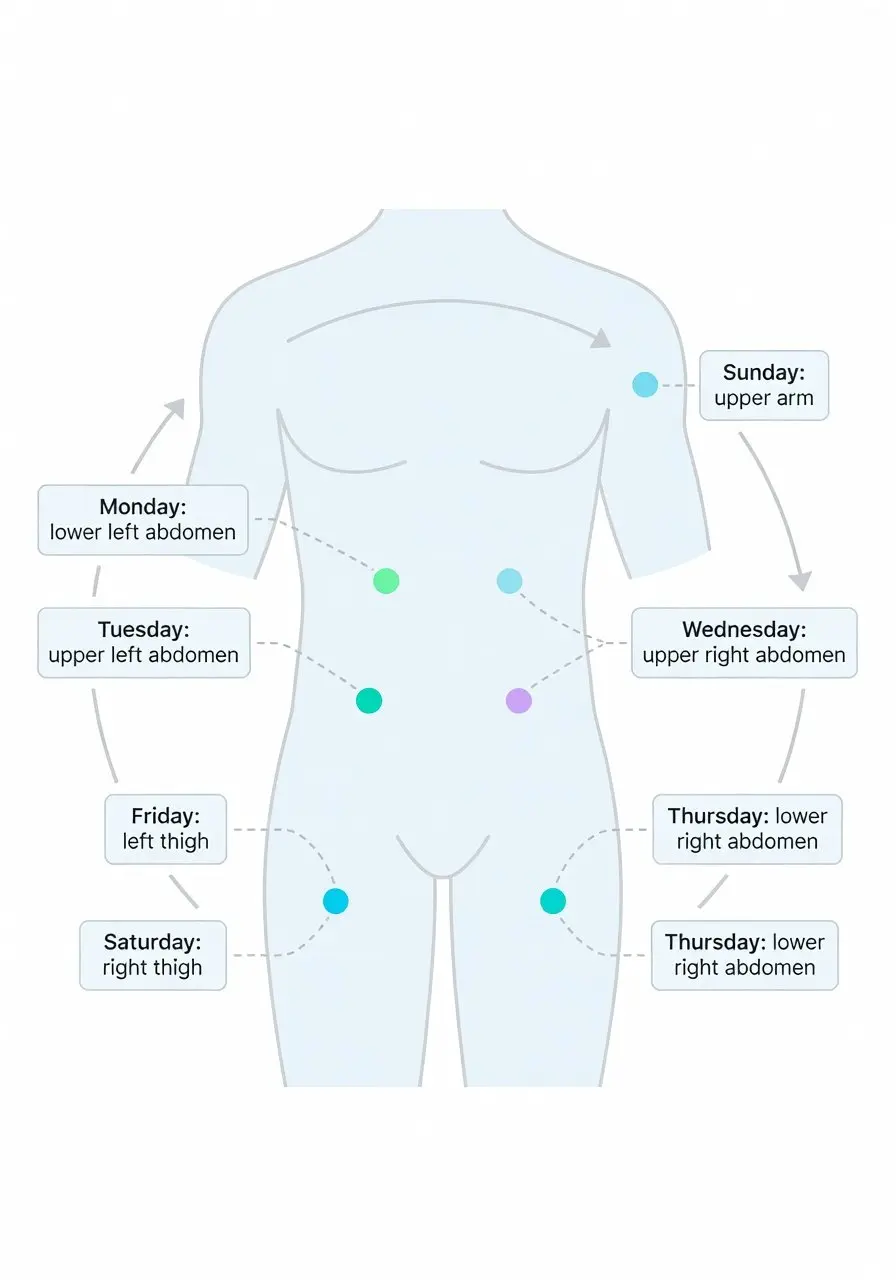
Rotation Pattern
A clockwise approach across regions is the simplest system. Here's a rotation framework I've seen work for people on daily protocols:
-
Monday: lower left abdomen
-
Tuesday: upper left abdomen
-
Wednesday: upper right abdomen
-
Thursday: lower right abdomen
-
Friday: left thigh
-
Saturday: right thigh
-
Sunday: rest area or upper arm
Within each region, move the actual injection point at least one inch from the previous site.
Tissue Recovery Time
A given square inch of subcutaneous tissue needs roughly two to four weeks to fully recover from a daily injection cycle. Shorter than that and you're stacking insult on insult.
Practical Steps to Minimize Injection Site Pain
Stack these habits and most people see their pain levels drop noticeably within a week or two. None of them are heroic.
-
Warm the pen. Pull it from the fridge 20 to 30 minutes before use.
-
Let alcohol dry fully. Count to ten before the needle touches skin.
-
Use a fresh needle every time. Dull needles tear tissue.
-
Pinch and angle correctly. A 45 to 90 degree insertion depending on needle length and body fat.
-
Inject slowly. Five to ten seconds for the bolus, then pause two seconds before withdrawing.
-
Rotate religiously. Map your sites on your phone if you have to.
-
Manage post-injection swelling with a brief cool compress; for persistent itch, a thin layer of hydrocortisone cream around (not on) the puncture site can help. An antihistamine like Claritin is reasonable if histamine release seems to be part of the picture, something that occasionally shows up with tesamorelin or certain combination peptide protocols.
A note on product selection: if you're consistently reacting to one brand, it's worth checking whether your next refill could be a citrate-free, benzyl-alcohol-preserved option, or a histidine-buffered formulation. Patients reacting to m-Cresol sometimes do dramatically better on a different brand of somatropin entirely. The official Genotropin safety information explicitly flags m-Cresol as a potential allergen, which is worth knowing before you assume the molecule itself is the problem.
When to Stop Injecting and Call a Doctor
This is the part I refuse to soft-pedal. If you're seeing a big red swelling that grows over 24 to 48 hours, gets warm or hot to the touch, develops purple bruising at the edges, or shows up alongside fever or red streaking, you stop injecting into that area and you get a clinician involved. "It's sterile" isn't a force field. One missed step (a vial handled poorly, alcohol that didn't dry, a contaminated reconstitution) can seed a cellulitis or abscess days after the injection itself.
The biggest mistake I see in self-injection communities is people trying to "optimize dosing" while their immune system is screaming at them at the injection site. Dose tweaks won't fix tissue injury. They won't outpace an infection. Repeated reactions in the same general region (whether it's GH, hCG, glp 1 medications, or a peptide stack like cjc 1295) deserve a real evaluation, not another forum thread.
The threshold I use, and recommend: if a reaction is worsening rather than calming down at the 24-hour mark, that's the call-the-doctor line. Period.
FAQ
Is some injection site pain with GH normal? Yes. Brief stinging, mild redness, and slight tenderness that resolve within hours are typical injection reactions and not a reason to stop therapy.
Why does my GH pen sting more some days than others? Temperature, hydration, the specific sc injection site, whether the alcohol dried, and how quickly you pushed the plunger all vary day to day. Small changes compound.
Can I switch brands if one preservative bothers me? Often, yes. m-Cresol sensitivity is documented, and prescribers can sometimes switch you to a benzyl-alcohol-preserved or differently-buffered product. Ask.
Does icing the site before injection help? A brief cool compress can numb surface nerves and reduce the initial pinch. Don't ice so aggressively that you constrict absorption.
What about reactions to other peptides like GHK-Cu or BPC 157? Mild local irritation can occur with copper peptide therapy and similar compounds. The same warning signs apply. Severe swelling or systemic symptoms are not "peptide vibes." They're a reason to stop.
Conclusion
Injection site pain in growth hormone products is rarely one thing. It's chemistry layered on physics layered on technique, with your individual tissue and immune system having the final word. The encouraging part is that almost every variable has a lever you can pull, from letting the pen warm up to picking a formulation with a gentler buffer to actually rotating sites the way the package insert tells you to.
What separates a tolerable GH routine from a miserable one isn't luck. It's paying attention to the signals, knowing which ones are background noise and which ones deserve a phone call, and refusing to normalize reactions that are clearly trending the wrong way.
Stay observant. Stay rotated. And when something doesn't feel right, trust that instinct over the urge to push through.
Articles
Trying to decide between Testosterone Enanthate vs Cypionate for TRT? Discover the real differences, half-life comparison, side effects, dosing tips, and which option is best for stable hormone levels.
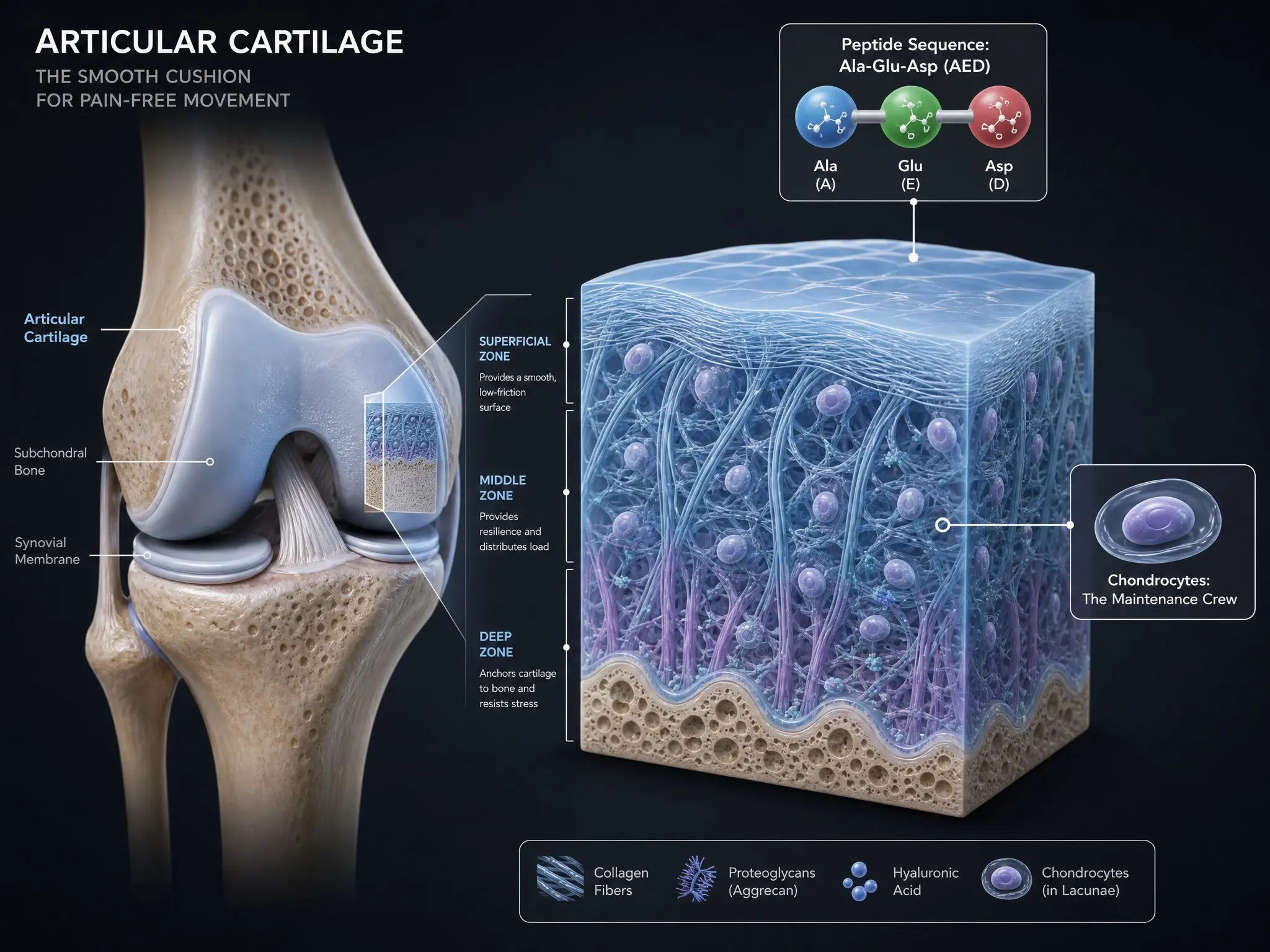
Quick answer: Cartalax (often written Cartalax AED) is an experimental short-peptide bioregulator, usually described as the tripeptide Ala-Glu-Asp, studied for cartilage support and age-related joint decline. People usually find Cartalax after hitting a wall with their knees, hips, shoulders, or hands and going hunting for the compound nobody mentioned at the orthopedic visit.
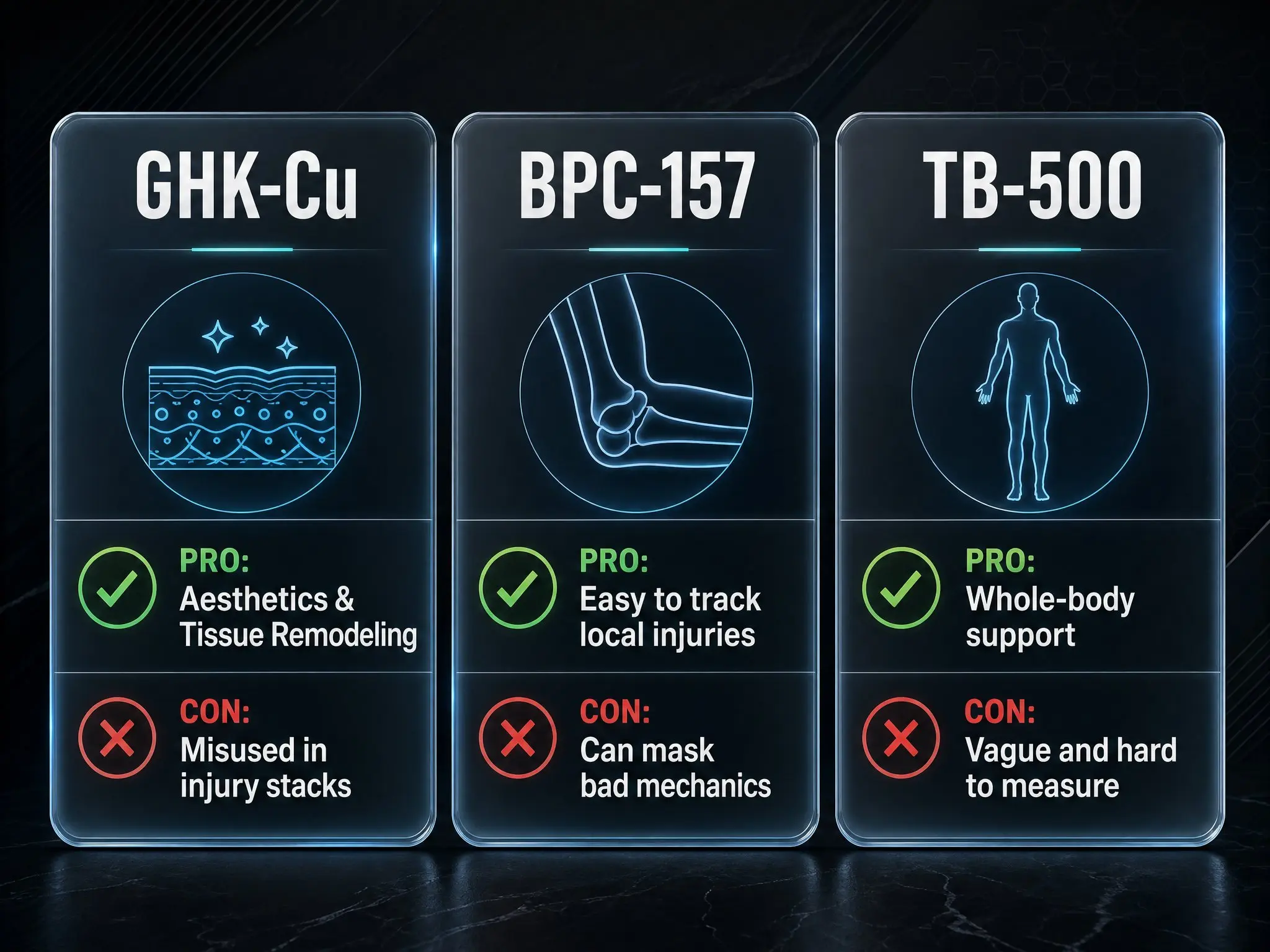
If you've been hanging around the peptide corners of the internet long enough, you've seen the same three names get treated like a holy trinity: GHK-Cu for glow, BPC-157 for "my elbow is finally usable", TB-500 for "my whole body feels younger".
Customers Reviews
Please leave your review on products or service below.
Thank you beforehand.
- Excellent site and very easy to navigate.
- Easy to use and locate items.