


Post-Workout Mobility Routine After Heavy Training Guide

Introduction
A solid post-workout mobility routine after heavy training is simple: spend about 10 minutes moving from a light downshift (easy cardio), to quick tissue work (foam rolling), to controlled active mobility for the joints you just taxed (usually hips, ankles, and upper back). Do it while you're still warm, keep the intensity mellow, and treat it like a nervous-system reset plus a range-of-motion "return to baseline" instead of some mystical soreness eraser.
Most people mess this up in one of two ways. They either skip it completely, then wonder why they walk like a rusty robot the next morning. Or they turn the cooldown into a dramatic stretching festival, yanking on tired muscles like that's going to brute-force "actual recovery." It can feel good, sure. The research is pretty consistent that post-exercise stretching is not the DOMS prevention hack social media sells it as, even when it has short-term range-of-motion perks, which you can see reflected in reviews like this one on post-exercise stretching versus no stretching and this broader systematic review.
So we're going to be grown-ups about it: use mobility to come down from heavy work, protect joints, restore active range, and walk out of the gym feeling put-together enough to sit on a couch like a normal person.
Why do heavy sessions make you feel stiff?
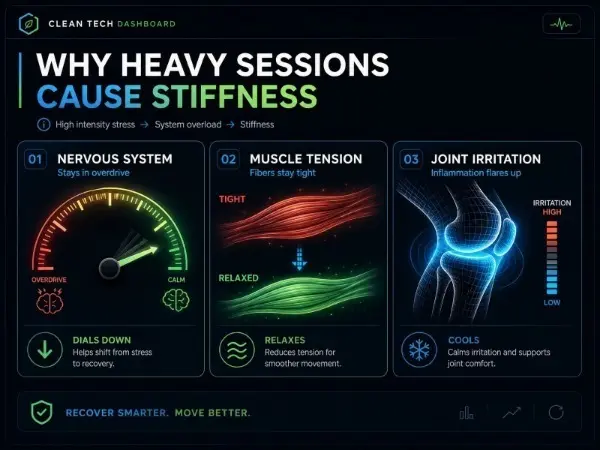
You don't get stiff because your body suddenly "needs a stretch." You get stiff because heavy training is loud information. Your tissues, joints, and nervous system all hear it, interpret it, then react in ways that are usually protective.
Nervous system downshift
Hard sets and intense exercise crank up sympathetic drive. That's not woo, that's physiology. You lift heavy, sprint, grind a hill, your body decides it's go-time: higher arousal, tighter baseline tone, more bracing, more guarding. If you end a session by slamming your water bottle, scrolling your phone, and driving home hunched over the steering wheel, you basically never tell your system, "Hey, we're safe now."
A cooldown that includes low-intensity movement and controlled breathing is the downshift. Not glamorous. Very effective.
Muscle tone and tension
After a heavy workout, your muscles can sit in a higher resting tone for a while, especially the ones you hammered with lots of eccentric load. Think quads after squats, calves after running, hip flexor after cycling, lats after deadlifts and rows. That "tight" sensation is often protective tension plus fatigue, not a literal shortening that needs to be yanked longer.
This is why I'm skeptical of the idea that you have to stretch right after. Static stretching right after lifting can feel comforting, but it's not automatically a recovery upgrade. I'd rather see you do active movements that remind the body how to own positions, not just tolerate them.
Joint irritation cues
Joints get grumpy when you load them heavy, especially with repetitive patterns. Knees after a high-volume squat day. Ankles after a long run on slanted sidewalks. Hips after biking with a closed angle for an hour. Sometimes the stiffness is a joint irritation cue, not a "my hamstrings are short" story.
Mobility work can help because you're improving synovial fluid movement, reducing threat, and restoring coordination. If you want the anatomy nerd lane, mobility training's relationship to connective tissue and joint mechanics is laid out nicely in this technical paper. It's not bedtime reading, but it's legit.
What should this routine accomplish in 10 minutes?
Not enlightenment. Not flexibility transformation. Ten minutes is for getting you out of the gym with less stiffness, better posture, and a cleaner setup for the next session.
Here's the target:
-
Restore active range in the joints that just did the work, so your movement doesn't "stick" later that day.
-
Reduce protective tightness without picking a fight with tired tissue.
-
Support a posture reset so you're not locked in that squat-braced or bike-curled shape until dinner.
If you want real flexibility changes, schedule it like training. Put 20 to 30 minutes on a separate day or later in the day when you can actually focus, not when you're sweaty, depleted, and doing limp hamstring stretch holds out of guilt.
Follow this post-session sequence
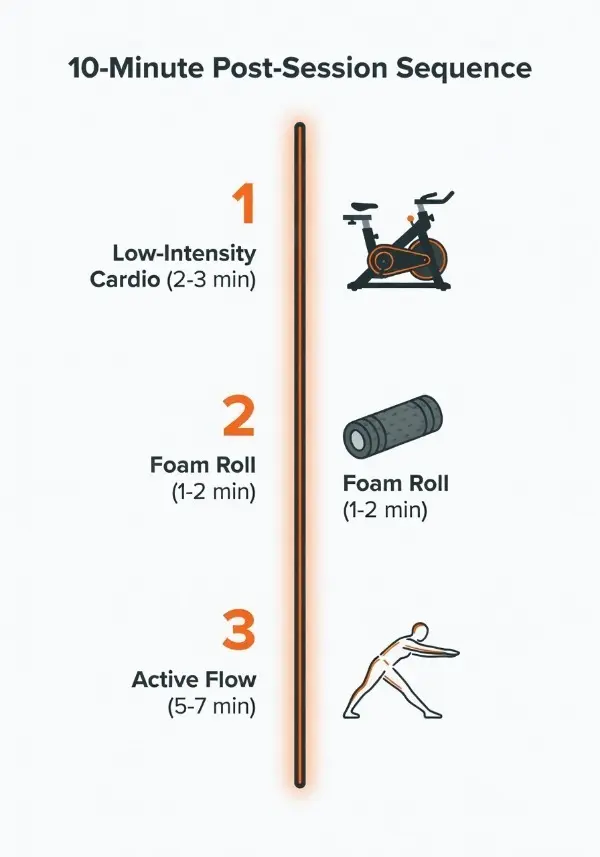
Order matters. If you jump straight to aggressive stretching, you're skipping the part where the body actually calms down. Also, your "starting position" for mobility is better when your breathing isn't frantic and your heart rate isn't still elevated.
Do it like this:
-
Low-intensity cardio for 2 to 3 minutes.
-
Foam roll with intent for 1 to 2 minutes total.
-
Active mobility flow for 5 to 7 minutes.
That's the routine. Nothing fancy. Just clean.
Low-intensity cardio
Walk. Light jog. Easy spin on a bike. Even a couple minutes of gentle rowing if that's your thing. You're chasing circulation and a gradual shift into parasympathetic mode, not conditioning. Call it active recovery if you want, but keep it honest: you should be able to breathe through your nose and talk without huffing.
If you're the person who finishes heavy deadlifts and immediately sits, then wonders why their low back feels like it's setting into concrete, this is the boring fix.
Foam roll with intent
Foam rolling is not punishment. It's also not a full-body hobby.
Pick one or two spots that feel like they're holding the whole pattern hostage. Quads after squat. Calves after running. T-spine if you just did pressing. Roll slowly, pause on tender areas, and keep pressure tolerable. The evidence on self-myofascial release is actually more supportive than people assume, especially for range of motion without obvious performance downside, which shows up in reviews like this one on SMR for athletes and the classic foam roller analysis.
One minute can change how your next mobility drills feel. That's the point.
Active mobility flow
This is where the "mobility over passive flexibility" idea earns its keep. You move through range under control, you teach the nervous system that the positions are safe, and you clean up the edges of motion that get sloppy when you're fatigued.
Active mobility is also less likely to leave you feeling weirdly floppy if you're about to walk to your car, take stairs, wrangle kids, or do life.
Use these moves for hips, ankles, spine
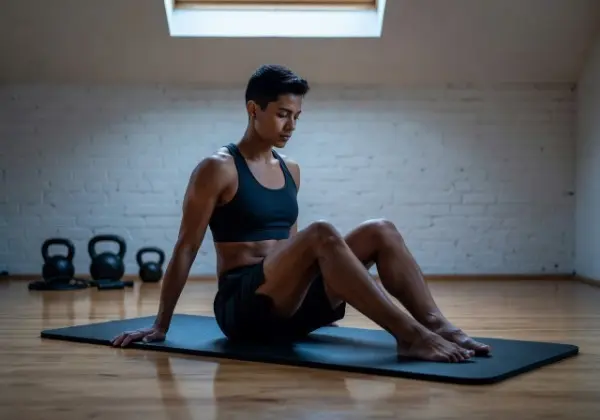
If you only ever do three things after training, make them these. They cover hip mobility, ankle mobility, and thoracic spine motion, which is basically the triangle of "why do I feel old."
90/90 hip switches
Sit in 90/90, rotate your legs side to side, and stay tall through the torso. Go slow enough that you can feel what your hip is doing, not just fling your knees around. If you can, hover the knee for a second before you set it down. That little isometric control is gold for restoring active range.
Hips tend to lock up after squats, deadlifts, or long periods of hip flexion like biking. This drill is a clean signal: internal rotation exists, external rotation exists, and your pelvis doesn't have to clamp down to survive.
Kneeling ankle rocks
Half-kneel with the front foot flat. Drive the knee forward over the mid foot mobility line without the heel popping up. Back off before pain. You're exploring dorsiflexion, not hunting for a stretch record.
If you run, this is non-negotiable. Ankles get stiff, stride mechanics get weird, knees start taking the blame. If you lift, ankles affect squat depth and knee tracking. If you bike, ankles can still get cranky from repetitive plantarflexion patterns.
Thoracic open books
Side-lying, knees bent, arms out, rotate the top arm across your body and let your upper back move. Keep your lower body quiet. Breathe into the ribs. This is posture work disguised as mobility.
Your spine should rotate. Your shoulders like it when it does. Your neck likes it when your upper back does its job.
(Yes, you can do a cow stretch too if your back muscles feel glued together. It's not magical. It's just a friendly way to restore spinal motion.)
Adjust for lifting, running, biking

Same sequence, different emphasis. The workout dictates the mobility.
Squat and deadlift days
After heavy squats or deadlifts, I bias hips and trunk. Your legs are usually the loudest, but the sneaky issue is that bracing pattern that lingers. Do the cardio downshift, then hit 90/90 hip switches, then open books, then ankle rocks. If your quads are screaming, a brief quad stretch can be fine, but keep it gentle and short. No heroic couch stretch right after you just took heavy sets to the brink.
Also, if you train strength through a full range of motion consistently, you may be getting flexibility gains baked into the work itself, which lines up with research on resistance training and ROM improvements. So if your plan is "I lift partial reps and then stretch to fix it," maybe just… lift better reps.
Run days
Running makes calves and hips feel like they're shrink-wrapping your bones. Do easy walking for a couple minutes, then roll calves lightly, then do ankle rocks and open books. Add 90/90 if your hips feel sticky.
Static stretching after running can feel nice, especially for calves, but don't crank it. If you push hard into pain right after a run, you're not "releasing" anything, you're just irritating tissue that's already loaded.
Bike days
Cycling is a hip flexor and quad story for most people, plus the posture curve. Do a short easy spin, then roll quads briefly, then 90/90 hip switches, then open books. If you love the couch stretch, save the longer version for later in the day. Right after the ride, keep it more like a range-of-motion rinse than a deep flexibility session.
Get intensity, timing, and holds right

This is where good intentions go to die. People either do too much, too hard, too soon, or they do a bunch of random stretches with no relationship to the workout.
Dynamic vs static use
Dynamic stretching is usually the warm-up tool. Post-workout, I prefer controlled mobility first, then static stretching only if it's calming and you're not about to do another intense activity.
Here's a simple way to think about it:
|
Tool |
Best time |
What it's good for |
How it should feel |
|---|---|---|---|
|
Dynamic stretching |
Before training |
Prep, temperature, coordination |
Snappy but controlled |
|
Active mobility |
After training |
Restore active range, reduce guarding |
Smooth, no strain |
|
Static stretch |
After training or later |
Comfort, short-term ROM, downshift |
Mild to moderate, never sharp |
If you insist on static stretches post-workout, keep holds around 30 to 60 seconds and stay at a moderate intensity, not pain-face intensity. Mayo Clinic's general guidance on stretching is refreshingly sane about this stuff.
Duration and effort scale
Ten minutes is plenty for a cooldown routine. If you have more time, I'd rather you spend it on sleep, hydration, workout nutrition, and planning the next session than on stretching marathons you resent.
Effort-wise, aim for a 4 to 6 out of 10. Enough sensation that you know you're in it, not so much that your body fights back. Post-workout mobility is cooperation, not conquest.
Pain rules and red flags
Sharp pain is a hard stop. Numbness, tingling, radiating symptoms, joint pinching that feels worse as you repeat the motion, those are red flags. Same for swelling, instability, or pain that changes your gait. Mobility drills should reduce threat, not trigger alarms.
And if you're dealing with recurring back injuries or cranky knees, don't treat this article like medical care. Get a qualified clinician to look at your pattern. Mobility can support overall tissue health, but it's not a diagnosis.
FAQ
Should I do stretching right after every workout?
No. If you like it, keep it short and low-intensity. If you hate it, don't force it. I'd prioritize warm-up mobility for performance and use post-workout work mainly to reduce muscle tension and stiffness.
Will post-workout mobility reduce soreness?
Maybe a little in how you perceive soreness, but it's not a reliable lever for muscle soreness the way sleep, total load management, and nutrition are. The evidence around stretching and DOMS is underwhelming, even when it helps short-term range.
Is foam rolling necessary?
Not necessary, just useful. One to two minutes on a problem area can improve how your mobility drills feel and may improve ROM without messing with strength. If you don't have a roller, skip it and do the active movements.
How long should the whole routine take?
Ten minutes is the sweet spot for most people after heavy training. If you've got 20 minutes, consider splitting it: 10 minutes right after, then a longer flexibility or yoga session later.
Can I do this on rest days too?
Yes, and honestly it's often better. Rest day mobility sessions are where you can chase real flexibility gains, longer holds, and more focused work without being exhausted.
What if I'm training twice in a day?
Keep the post-session mobility very gentle, mostly downshift and light active range. If you do aggressive static stretching between sessions, you might feel too loose or irritated going into the second bout.
Conclusion
If you want the simplest truth: post-workout mobility after heavy training is about coming back to center. You're telling your nervous system to stand down, you're letting joints move like joints again, you're easing protective tightness so your posture doesn't get stuck, and you're setting up the next workout like someone who plans to keep training for a long time.
Do the 10 minutes. Keep it controlled. Save the long stretching projects for when you can actually treat them like training, not like an exhausted ritual you do half-heartedly on the gym floor.
Articles
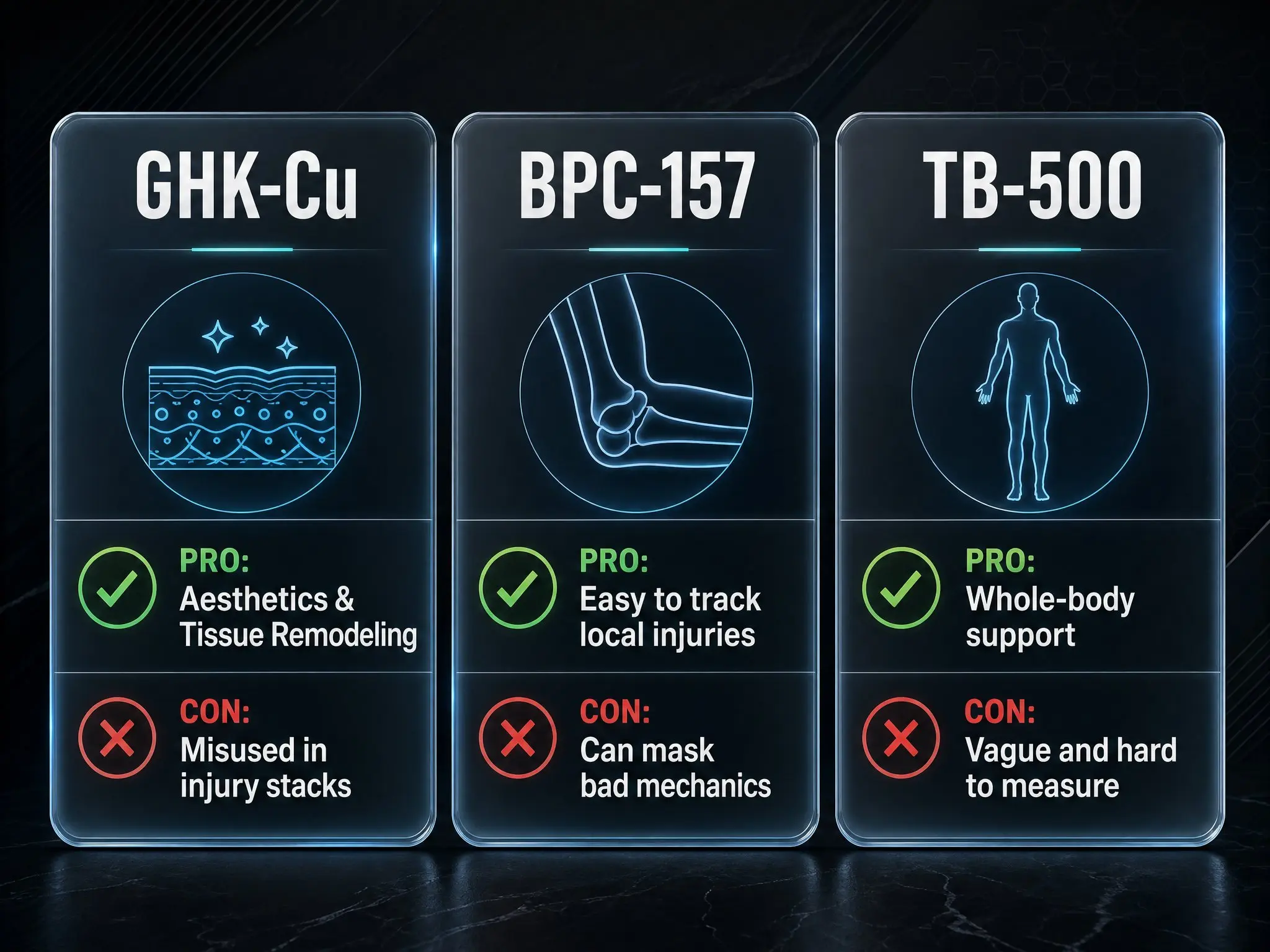
If you've been hanging around the peptide corners of the internet long enough, you've seen the same three names get treated like a holy trinity: GHK-Cu for glow, BPC-157 for "my elbow is finally usable", TB-500 for "my whole body feels younger".

Anyone who has shot daily somatropin for more than a few weeks knows that some days the pen barely registers and other days it feels like a wasp landed in the abdominal fat.
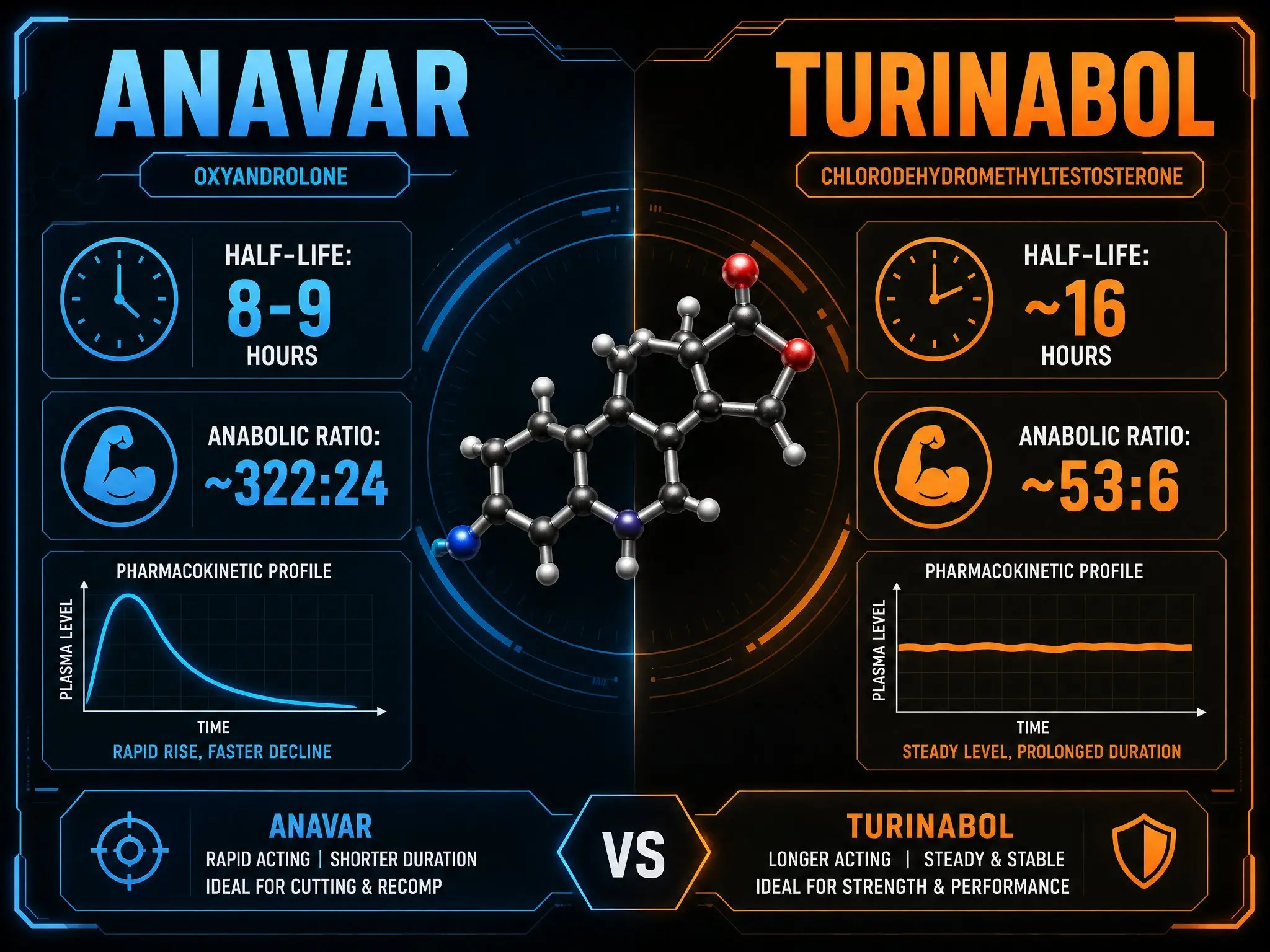
Anavar (oxandrolone) tends to be the pick for a leaner, denser, fuller look with faster visible results, while Turinabol (Tbol, 4-chlorodehydromethyltestosterone) leans toward slower, sustained "dry strength."
Customers Reviews
Please leave your review on products or service below.
Thank you beforehand.
- Excellent site and very easy to navigate.
- Easy to use and locate items.